

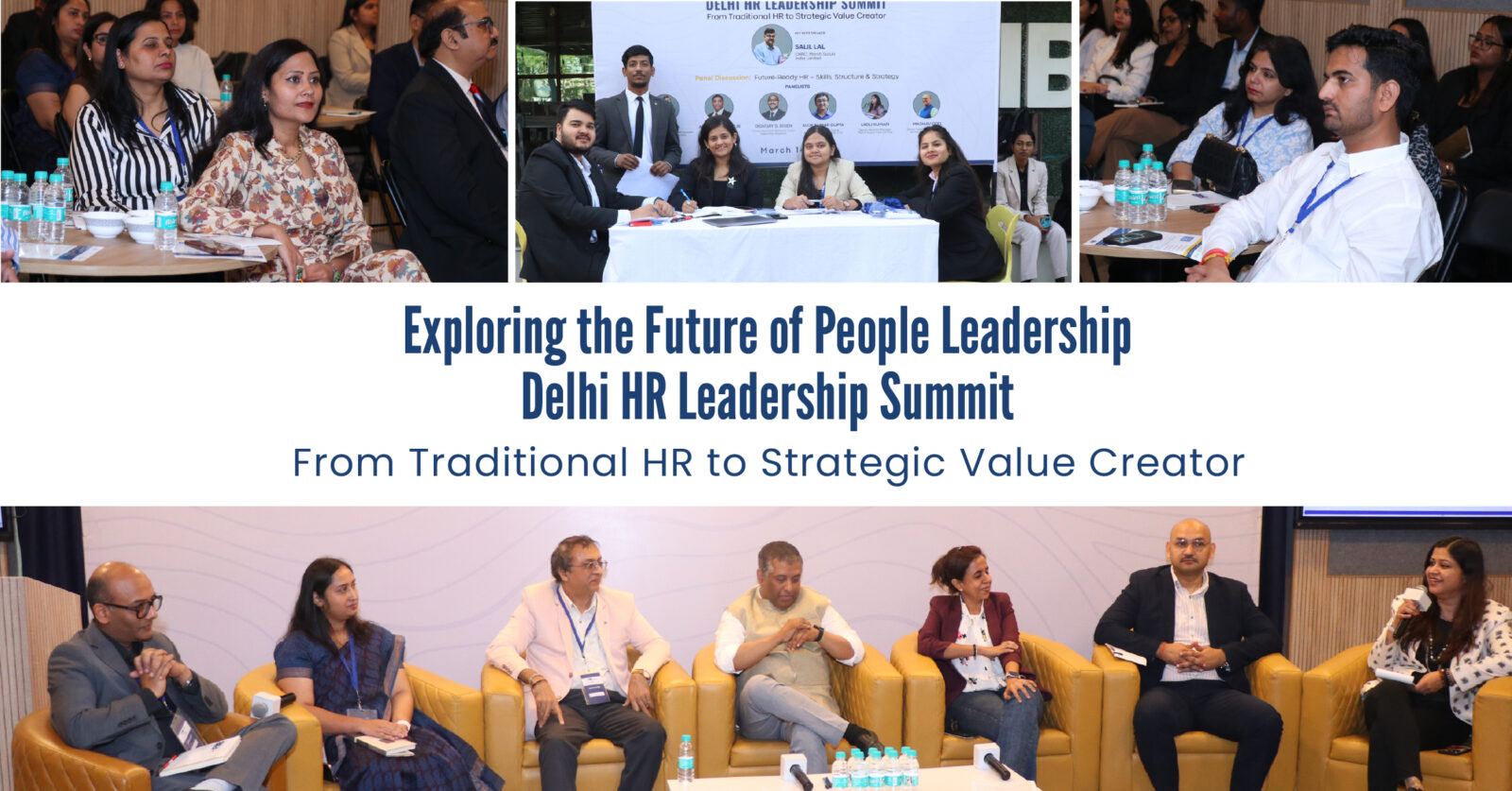
The future of HR is being shaped by rapid technological advancement, evolving workforce expectations, and the growing importance of strategic leadership within organizations. Human resources today is no longer limited to administrative operations; it is increasingly responsible for driving organizational capability and business performance.
These themes formed the foundation of the Delhi HR Leadership Summit, organized by FIIB in collaboration with the CoreHRIR Group. The summit brought together HR leaders and practitioners to explore how the future of HR will be defined by skills development, digital transformation, and strategic workforce planning.
The event began with an inaugural address by Dr. Radhika Shrivastava, President & CEO of FIIB, who emphasized the importance of aligning management education with industry needs.
“Management education must move beyond general knowledge to creating role-ready professionals who can contribute meaningfully from day one.”
Her remarks highlighted the growing need for stronger industry–academia collaboration to develop talent capable of working in technology-driven business environments.
Building Workforce Capabilities for the Future
The keynote session by Salil Lal, CHRO at Maruti Suzuki India Limited, focused on the evolving expectations from HR leaders.
“The future of HR lies in building capabilities that help organizations adapt, innovate, and lead in a rapidly changing world.”
He emphasized that HR leaders must now focus on skills development, workforce adaptability, and leadership capability building, particularly as organizations navigate digital transformation.
Recent research supports this shift. According to global workforce studies, 73% of HR leaders are already using AI-powered tools in at least one HR function, indicating the growing importance of technology in the future of HR.
Panel Discussion: Future-Ready HR — Skills, Structure & Strategy
One of the most engaging sessions of the summit was the panel discussion titled “Future-Ready HR: Skills, Structure & Strategy.”
The panel was moderated by Vertika Vaish, Senior Manager – Global HR Transformation at Bata Group, who guided the conversation around the intersection of technology, people strategy, and organizational change.
The distinguished panel included:
- Ruchi Mago, Head HR & Employee Experiences, Orange Business
- Agniwesh Thakur, Business & Tech Leader – HXM, Accenture
- Digvijay S. Bisen, Group Head HR, Yatharth Super Speciality Hospitals
- Alok Kumar Gupta, Joint VP – COE HR Ops & Technology, DCM Shriram Ltd
- Ladli Kumari, Deputy General Manager, Maruti Suzuki India Limited
- Madhav Goel, Senior Director Rewards – IMEA & GCC, Marsh McLennan
The discussion centered on the theme Technology, Data & AI in HR, highlighting how digital transformation is reshaping HR functions.
Key Themes Shaping the Future of HR
The panel explored several critical themes influencing the future of HR leadership.
Strategic Themes Discussed by HR Leaders
| Theme | Key Insight |
|---|---|
| AI in HR | Automation is improving efficiency across recruitment, payroll, and onboarding |
| Workforce Capability | Continuous skill development is essential for future-ready organizations |
| Data-Driven HR | Workforce analytics enables better decisions on retention and planning |
| Agile HR Structures | Flexible operating models help HR respond faster to business needs |
| Human-Centric HR | Employee experience remains central to organizational success |
Key Panel Insights
Panelists shared valuable perspectives on how HR leaders can navigate transformation.
Ruchi Mago highlighted the importance of employee experience:
“The future workplace will be defined by organizations that place employee experience at the center of their people strategy.”
Agniwesh Thakur emphasized the role of technology:
“HR transformation today is driven by data, digital platforms, and the ability to translate insights into better people decisions.”
Digvijay S. Bisen spoke about workforce capability:
“Future-ready organizations are built by continuously developing the skills and capabilities of their workforce.”
Alok Kumar Gupta stressed the need for agile HR structures:
“HR must evolve into agile structures that enable faster decisions and stronger alignment with business priorities.”
Ladli Kumari reinforced the strategic importance of HR leadership:
“HR today plays a strategic role in shaping culture, capability, and long-term organizational growth.”
Madhav Goel highlighted the role of HR in transformation:
“In times of transformation, HR leaders become catalysts who guide organizations and people through change.”
Technology, Data and AI in HR: Five Key Takeaways
The panel discussion also highlighted practical insights on AI and HR transformation:
- AI is transforming HR operations by automating routine processes such as payroll, recruitment screening, onboarding, and data management.
- AI literacy is becoming essential for HR professionals and employees to effectively adopt emerging technologies.
- Workforce analytics enables strategic HR decisions, particularly in areas like attrition and retention.
- Data privacy and security remain critical, as HR systems manage highly sensitive employee information.
- Automation allows HR to focus on strategic priorities, including leadership development and organizational culture.
The Road Ahead for HR Leaders
The discussions at the summit reinforced a clear message: the future of HR will depend on how effectively organizations integrate technology, people strategy, and leadership development.
HR leaders must move beyond operational roles to become strategic partners shaping the future of work.
By building data capabilities, embracing AI, and focusing on human-centered leadership, organizations can create HR functions that deliver lasting business value.












Leave a comment