

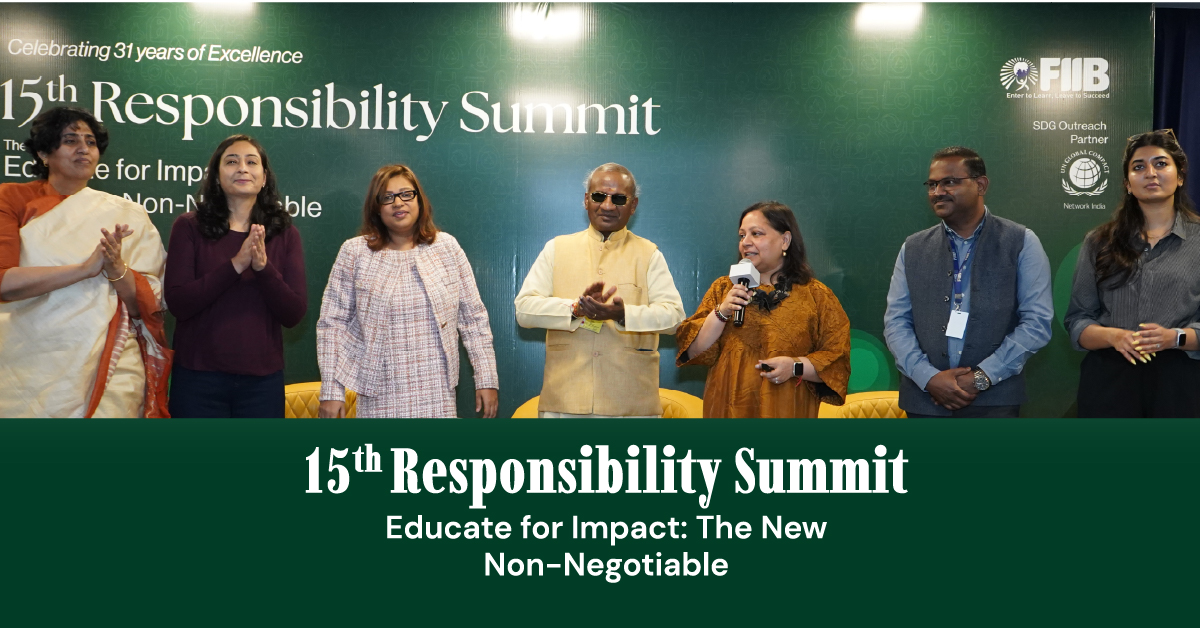
21st February 2026 | New Delhi
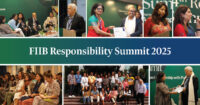
As Fortune Institute of International Business (FIIB) marked 31 years of legacy in management education, the 15th Responsibility Summit brought together leaders from government, industry, academia, and the social sector to address a defining question for the future of business schools:
What does tomorrow actually need from our classrooms?
The answer was clear and urgent — impact-driven education is no longer optional. It is non-negotiable.
With the overarching theme “Educate for Impact: The New Non-Negotiable,” the summit reinforced FIIB’s commitment to responsible management education, sustainability integration, ethical leadership, and social impact.
Educate for Impact: Redefining the Purpose of Management Education
In today’s rapidly evolving global landscape, business education cannot remain limited to technical competence and managerial efficiency. Organisations operate under heightened ESG scrutiny, sustainability mandates, and ethical accountability.
The summit emphasized that:
- Business schools must move beyond fragmented ethics modules.
- Responsibility must be embedded into curriculum design, pedagogy, research, and institutional culture.
- Education must prepare leaders not just for markets, but for society.
Anchored in the Principles of Responsible Management Education (PRME) values, the conversations called for cultivating leaders who balance profit with purpose, performance with accountability, and growth with long-term societal value.
Leadership in Responsibility Awards: Recognising Impact Across Sectors
A key highlight of the summit was the Leadership in Responsibility Awards, honouring distinguished leaders who exemplify impact-driven leadership.
🏅 Shri S. Govindaraj, Commissioner for Persons with Disabilities, Ministry of Social Justice & Empowerment, Government of India
➡️Emphasised that education must build character, accountability, and inclusive progress.
🏅 Mr. Praveen Karn, Group Head – Sustainability & CSR, Spark Minda Group
➡️Reinforced that quality education must not remain an urban privilege, urging collective responsibility in bridging the rural–urban divide.
🏅 Ms. Swaralipi Maity, Executive Director, Wattpower Systems Pvt. Ltd.
➡️Highlighted that true sustainability begins with value creation, the right incentives, and collective effort.
These recognitions reinforced a powerful message: Responsible leadership is action-oriented, inclusive, and systemic.
Social Internship Program (SIP) Mela: Learning Beyond the Classroom
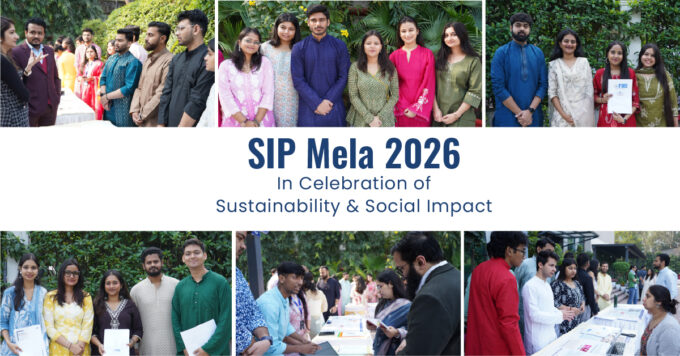
The day also featured Social Internship Program (SIP) Mela, showcasing student-led impact projects aligned with the UN Sustainable Development Goals (UNSDGs).
Through poster presentations and immersive reflections, students demonstrated how real-world engagement with Social Sector Organisations (SSOs) cultivates:
- Empathy and contextual intelligence
- Accountability and ethical awareness
- Critical thinking and problem-solving
- Behavioural understanding
The SIP Mela reinforced a central principle of impact-driven management education:
Responsibility is not taught only through theory — it is internalised through lived experience.
The summit also announced the Best SIP Impact Showcase Awards, recognising outstanding student contributions, and felicitated partner SSOs who enable meaningful community engagement.
Panel Discussion: Preparing for Responsible Business
The intellectual anchor of the summit was the panel discussion:
Preparing for Responsible Business: What Does Tomorrow Actually Need from Our Classrooms?
Moderated by Dr. Radhika Shrivastava, President & CEO, FIIB, the discussion reframed the debate:
“The question is not whether responsibility matters. The real question is—are our students prepared to act responsibly when it is difficult?”
The panel brought together diverse voices:
- Dr. Chandrika Parmar, Chair – PRME India Chapter, SP Jain Institute of Management & Research
- Naini Chauhan, Lead – Design for Impact, Non Zero
- Sumit Barat, Chief Sustainability Officer, BluPine Energy
- Ejaz Shan, Learning & Organisational Development Specialist, Bal Raksha Bharat (Save the Children India)
Key Themes from the Dialogue
1. Learning Must Precede Earning
The panel challenged the dominant “earning vs learning” mindset, urging business schools to measure success beyond salary packages — focusing instead on learning depth and character formation.
2. Sustainability Must Shape Strategy
“Sustainability is not the cherry on top — it must shape every business decision.”
The discussion stressed integrating sustainability into core business strategy, finance, operations, and governance — not isolating it as a peripheral topic.
3. Ethical Intent and Behavioural Legitimacy
Ethical leadership requires the courage to do the right thing when no one is watching.
Participants emphasised embedding behavioural insights and emotional intelligence into management education to normalise responsible decision-making.
4. Long-Term Value over Short-Term Returns
Short-term performance metrics often overshadow long-term resilience and stakeholder trust. The panel underscored the need to recalibrate management education toward durability, accountability, and intergenerational value creation.
5. Culture Begins Within
Internal alignment between institutional values and practices strengthens credibility. Business schools must model the responsibility they seek to teach.
From Dialogue to Commitment
The summit concluded with a Responsibility Oath, collectively undertaken by students — symbolising a commitment to ethical leadership, sustainability, and social accountability.
While symbolic, the act reinforced a deeper truth:
Responsible business is not built by curriculum alone — it is shaped by commitment, collaboration, and conscious action.
Why Impact-Driven Education Is the Future
The 15th Responsibility Summit at FIIB reaffirmed a defining belief:
- Business education must create responsible leaders, not just job seekers.
- Sustainability must be central to management education.
- Ethics, behavioural understanding, and emotional intelligence are essential leadership competencies.
- Impact must be measurable, intentional, and embedded.
As management education evolves in India and globally, its success will increasingly be measured not only by placements and rankings, but by the quality of decisions graduates make when responsibility is difficult, costly, and consequential.
In this sense, responsibility is not non-negotiable because it is idealistic —
it is non-negotiable because it is necessary.
Read the Responsibility Report 2025–26 to explore FIIB’s continued commitment to impact and sustainability.










Leave a comment