

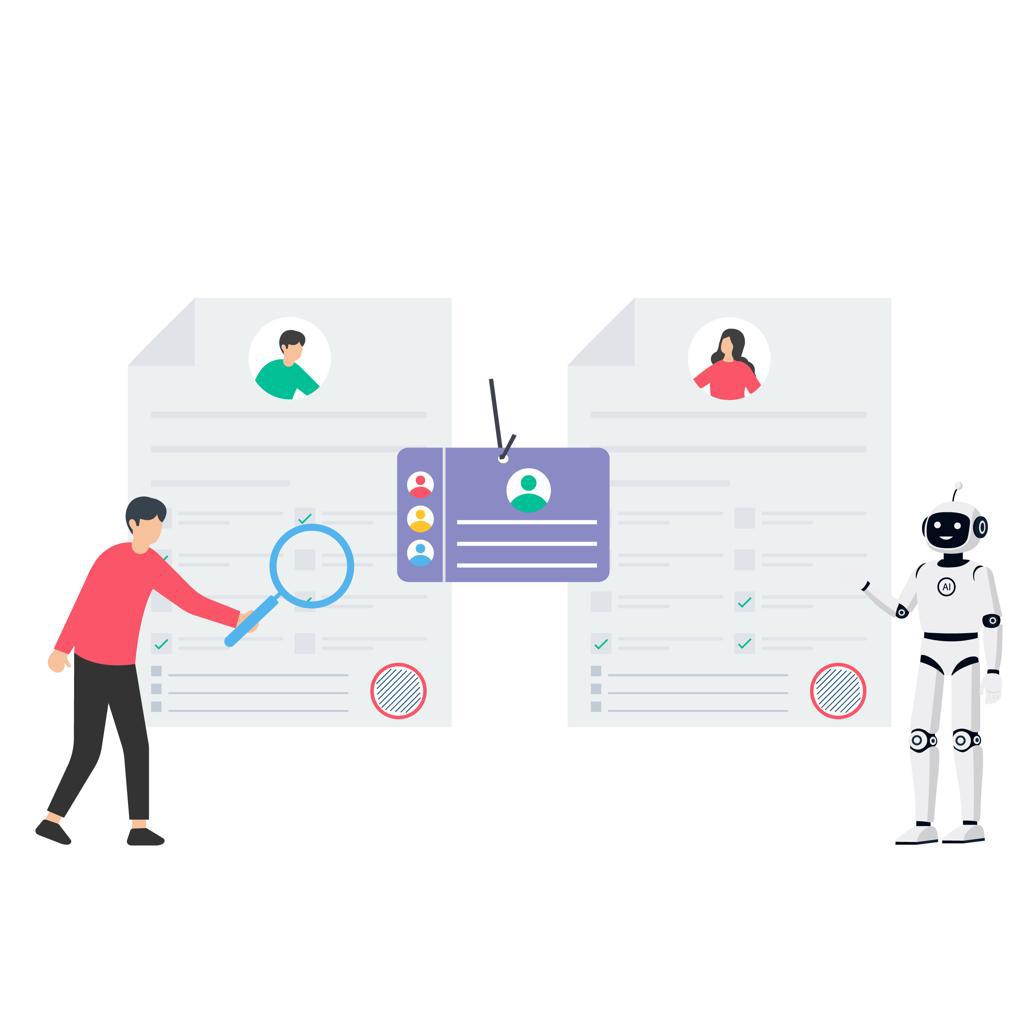
Somewhere in India right now, a job applicant is being evaluated by a system that has never met them, will never meet them, and does not particularly need to.
An algorithm has already scanned their résumé, compared it against hundreds of others, and decided whether a human recruiter will ever see their application. If they are fortunate, another automated system may have already scheduled their interview.
This is not a futuristic scenario. It is the current reality of hiring across industries including banking, IT, retail, and healthcare.
Today, AI in recruitment is embedded across the entire hiring pipeline. Algorithms can write job descriptions, target recruitment advertisements, screen applications, rank candidates, schedule interviews, and even evaluate video responses using automated analysis.
The appeal is obvious. Organizations are promised faster hiring processes, lower costs, improved candidate experience, and reduced human bias.
Yet, according to research led by Prof. Shuchi Dikshit, Assistant Professor, OB & HR at Fortune Institute of International Business, an important question remains largely unexamined:
Are these promises actually being fulfilled in real organizations?
The Gap Between AI’s Promise and Organizational Reality
The study, co-authored with Bhavya Kalra, an HR professional and FIIB alumna (PGDM Batch 2019-21) currently working at GyanDhan, takes a distinctive approach.
Rather than analysing AI recruitment tools in controlled experimental settings, the research draws on interviews with HR professionals across multiple industries, capturing how these systems function in real organizational environments.
The findings reveal a far more complex picture than the efficiency-driven narratives often associated with AI in recruitment.
Yes, AI can accelerate hiring processes and reduce certain forms of unconscious bias. Algorithms are less likely than humans to favour familiar names, well-known institutions, or familiar professional backgrounds. However, the research also highlights several practical challenges that organizations across sectors are encountering.
The Barriers Organizations Are Quietly Facing
Despite growing enthusiasm around AI in recruitment, many organizations are struggling with implementation barriers that rarely appear in technology vendor presentations.
Implementation Costs
Advanced recruitment technologies require significant investment. For smaller firms, the cost of implementing and maintaining these systems can be prohibitive.
Employee Resistance
Many HR professionals feel that automated systems threaten to replace their expertise rather than support it. This resistance can slow adoption and create internal tension within organizations.
Skill Gaps
Even when AI tools are deployed, many managers lack the technical understanding required to evaluate or challenge algorithmic decisions. This creates a risk of blind reliance on automated recommendations.
The Loss of Human Judgment
Experienced recruiters often emphasize the value of intuition, contextual understanding, and relationship-building in hiring decisions. Many worry that heavy reliance on AI in recruitment could weaken these human dimensions of talent acquisition.
When Algorithms Reinforce Bias Instead of Removing It
One of the most significant findings of the research concerns algorithmic bias.
AI systems are frequently promoted as tools that eliminate human bias in recruitment decisions. In practice, however, AI in recruitment does not always remove bias—it can relocate it.
Recruitment algorithms learn from historical hiring data. If past hiring decisions reflect structural inequalities or organizational preferences, the algorithm may learn to replicate those patterns. The result is a system that can reinforce existing biases more efficiently and with less transparency.
Unlike human recruiters, algorithms rarely explain their reasoning. Candidates who are screened out often have no visibility into why the decision was made or how to challenge it.
The Real Consequences of Algorithmic Hiring
When an algorithm rejects a candidate incorrectly, the consequences extend beyond a single job application.
A qualified applicant filtered out by one automated system may encounter similar outcomes across multiple companies using similar tools. For candidates from underrepresented backgrounds, first-generation professionals, or individuals with non-linear career paths, the risks associated with AI-driven recruitment screening can be particularly significant.
These concerns are beginning to attract attention from regulators.
For example, the European Union Artificial Intelligence Act classifies AI systems used in recruitment as high-risk applications, requiring transparency and human oversight.
India’s evolving AI governance and data protection frameworks are still developing comparable guidelines for hiring algorithms.
As AI in recruitment expands across Indian industry, the regulatory systems needed to govern it are still catching up.
The Strategic Question Organizations Haven’t Answered
Beyond questions of bias and governance, the research raises a deeper strategic issue:
What is the right balance between automation and human judgment in hiring?
In many organizations, the answer has been shaped primarily by cost and efficiency. AI systems are adopted because they promise faster processes and lower recruitment expenses.
However, few firms have rigorously evaluated whether AI in recruitment actually identifies better candidates.
The research argues that organizations need a more deliberate strategy.
Certain stages of the recruitment process—such as résumé screening or interview scheduling—may benefit significantly from automation.
Other stages, including final candidate evaluation and cultural fit assessment, may still require human insight and judgment.
Rather than replacing human decision-making, effective recruitment systems may need to combine algorithmic efficiency with human expertise.
What This Research Contributes
By documenting the gap between technological promise and organizational reality, this research provides a grounded perspective on the adoption of AI in recruitment.
For industry leaders, it offers practical insight into implementation challenges and organizational readiness.
For policymakers, it highlights the need for governance frameworks that ensure transparency and fairness without slowing innovation.
For scholars, it contributes empirical evidence from emerging economy organizations navigating rapid technological change.
Most importantly, the research reminds us that technology does not automatically produce fairer systems.
The algorithm that scheduled the interview did not ask whether the process was fair.
Someone still needs to ask that question.
Publication Note
This research has been published as a book chapter in an Emerald Publishing volume (Scopus listed).
Authors
Prof. Shuchi Dikshit
Assistant Professor – OB & HR
Fortune Institute of International Business, New Delhi
Bhavya Kalra
HR Manager
GyanDhan, New Delhi
FIIB Alumna (PGDM Batch 2019-21)
















Leave a comment