

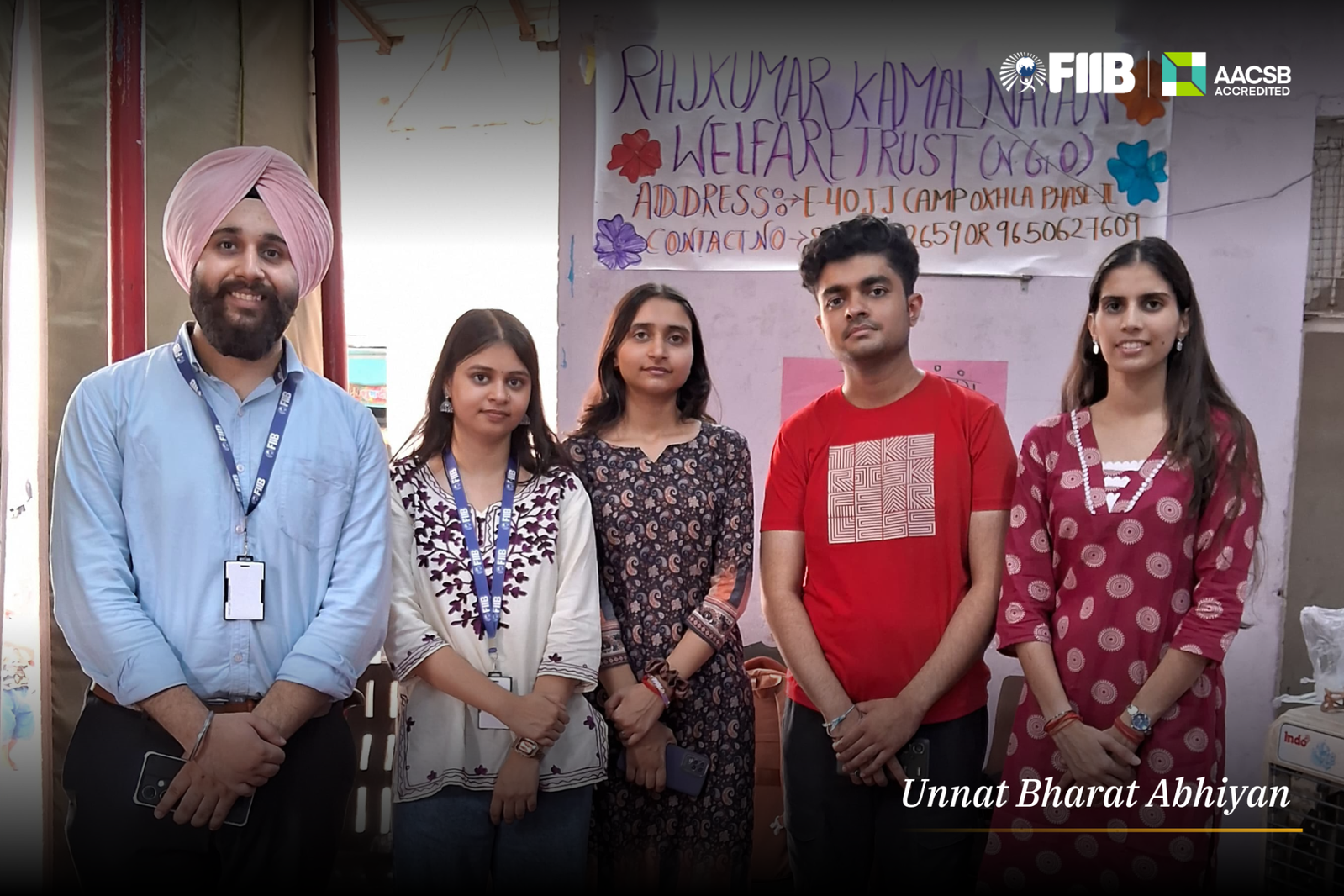
New Delhi | 8 October 2026 | Fourteen of sixteen teenagers at Sudhamta Foundation said they knew what to do if they were bullied online. Only five knew the step that matters most if they ever need to report it: keep screenshots before you block. That gap was found by five FIIB PGDM students, who taught the session and then analysed the answers.
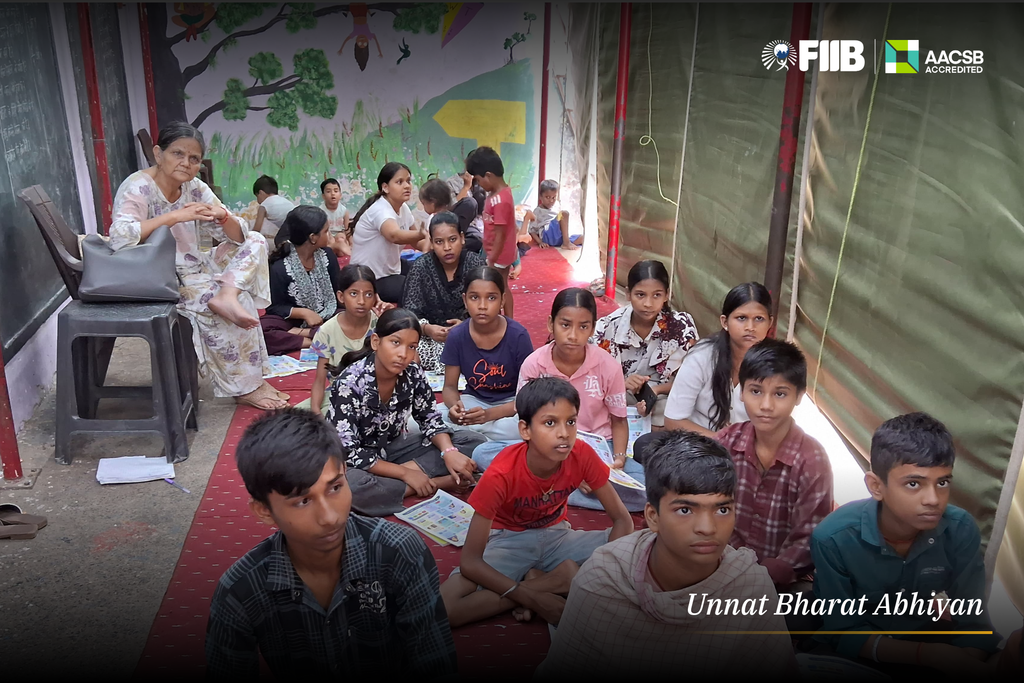
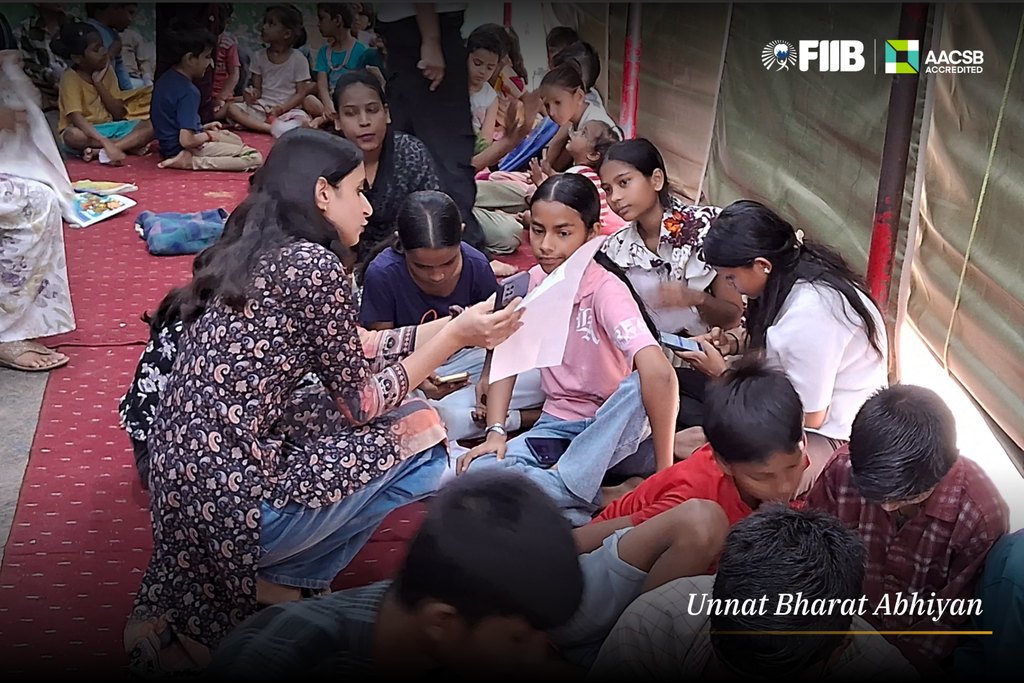
On 8 October, under the Unnat Bharat Abhiyan (UBA), Sristi Singh, Aditi Salaria and Abhinav Sharma (PGDM Batch 2026–28) and Kiran and Anmol Singh (PGDM Batch 2025–27) designed and ran a two-hour session at the Delhi foundation for students mostly aged 15 to 18. The team taught in simple Hindi, using a phone-based demonstration and pamphlets the students could take home. The first hour showed them how to build a Google Gemini Gem, a personalised AI study partner. The second covered how to recognise cyberbullying, whom to tell, how to respond, and how to spot fake or morphed videos.
Fourteen students said they could now use Gemini on their own, and twelve named creating a Gem as the most useful part of the day. Average ratings were 4.5 out of 5 for the AI content and 4.6 for cyberbullying. The forms also showed what students wanted next: twelve asked for basic digital skills, and several asked about cyber police. The team’s report recommends that the next session cover the National Cyber Crime Reporting Portal and helpline 1930.
“The session gave our students practical exposure to emerging AI tools and essential digital safety practices. Their feedback reflected greater confidence in using Gemini for their studies and a clearer understanding of how to respond to cyberbullying,” said Arumita Mitra, Founder, Sudhamta Foundation.
The initiative was conceptualised and led by Dr. Karan Grover, Faculty Lead, UBA, through FIIB’s Center for Responsible Management (CRM), which works with communities under UBA to make emerging technology accessible, understandable and safe. It is one way FIIB, a PRME Champion for 2026–27, puts responsible management into practice.
Responsible management is hard to learn from a textbook. Preparing for teenagers who may face online harm alone, the PGDM students had to start with the people affected: what they already knew, what put them at risk, and what would help them act. Measuring the results afterwards made the team accountable for whether it worked. That is the mindset FIIB wants its future managers to carry into every role: asking who a decision affects, owning its outcome, and using what they know to widen access, not narrow it. Initiatives like this turn conscious leadership from a classroom idea into a habit.
FIIB India thanks Sudhamta Foundation for hosting the team.















Leave a comment