

When AI Does the Work, What's Left for You?
Think Forward is a short weekly note on careers, learning, and leadership in a changing world of work. Written by FIIB President Radhika Shrivastava, it shares practical ideas, frameworks, and real stories to help students think more clearly about their professional journeys.
⚡ A 10-SECOND CHECK
When you use AI, what do you usually ask first?
Reply A/B/C/D — we’ll share what people say next week.
Last Week’s Check-In - Most readers said their biggest growth came from learning something new, though many also felt they were becoming more efficient at familiar tasks — exactly the plateau we discussed.
The Big Idea:
When AI Does the Work, What’s Left for You?
Across industries, AI is quietly reshaping entry-level work.
Large professional services firms are no longer experimenting cautiously — they are restructuring work around it.
PwC recently committed $1 billion to integrate AI across consulting, tax, and audit workflows, embedding AI into everyday professional tasks.
Deloitte is building ecosystems of AI assistants and agents designed to support research, analysis, and decision-making across consulting engagements.
And research from Goldman Sachs estimates that AI could automate portions of tasks across hundreds of millions of jobs globally.
At first glance, that raises an uncomfortable question for students:
If AI can already do the work junior professionals used to do… summarise documents, draft reports, analyse datasets, build financial models, and create presentation outlines… what happens to entry-level careers?
What the Evidence Actually Shows
A new 2026 report from Anthropic studying real AI usage across occupations offers a more nuanced answer.
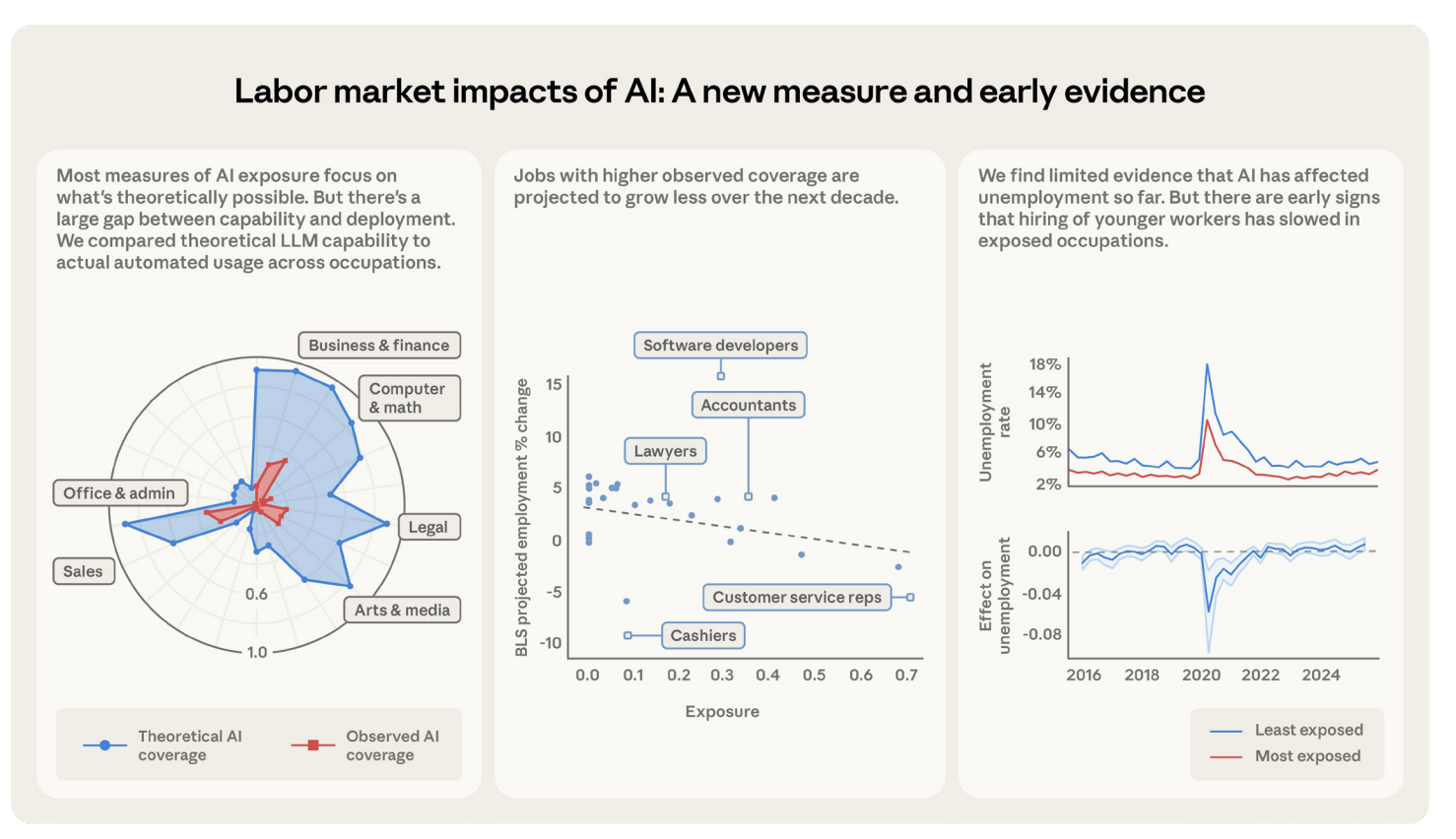
Three findings are especially important for students:
1. AI is far from replacing most work.
Current real-world usage covers only a fraction of what AI could theoretically automate.
2. Job loss is not yet visible in the data.
Researchers find no systematic rise in unemployment in highly exposed professions since 2022.
3. But hiring patterns are beginning to shift.
Early evidence suggests that hiring of younger workers may be slowing in some AI-exposed occupations.
This matters for MBA students.
Because AI may not eliminate jobs. But it changes what junior professionals are expected to contribute.
The differentiator is no longer producing analysis.
It is interpreting it.
Not information.
Judgment.
Not speed.
Clarity.
Not volume.
Synthesis.
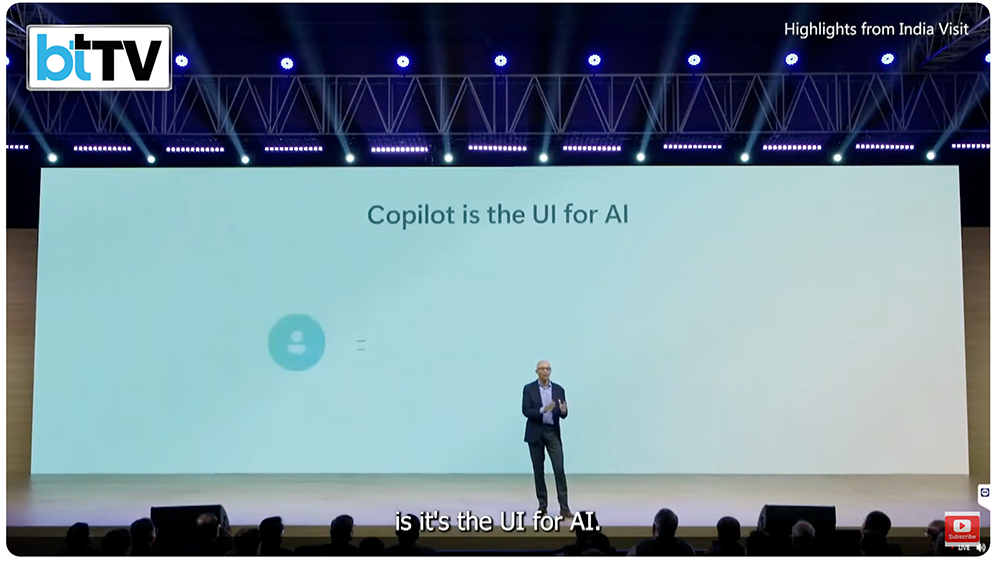
Microsoft CEO Satya Nadella describes this moment as the "Copilot era" — where AI assists professionals but still relies on human judgment to guide it.
Watch → https://www.youtube.com/watch?v=_b90GHIBq8E
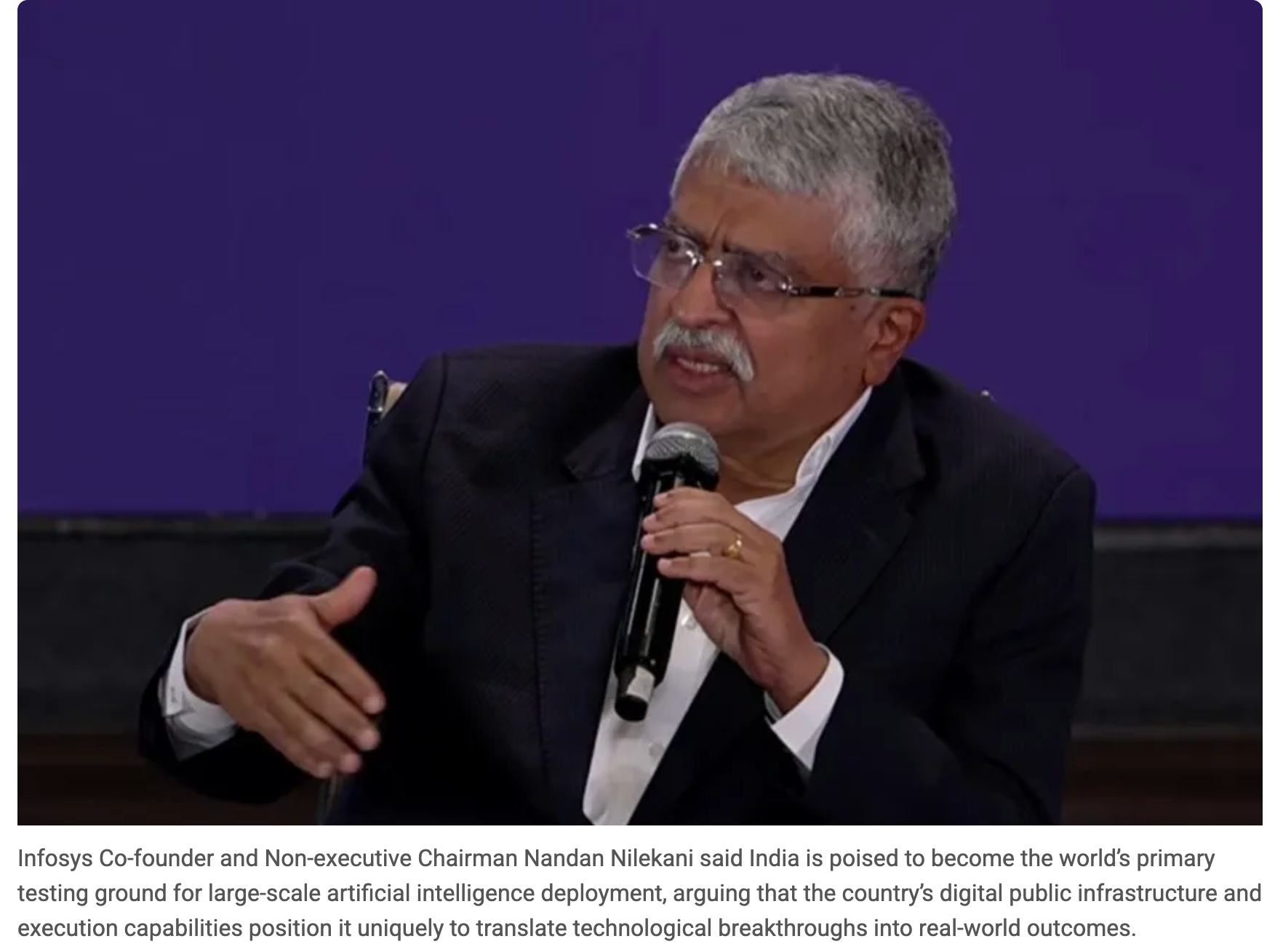
At the same time, India may be uniquely positioned in this shift.
Infosys co-founder Nandan Nilekani recently argued that India could lead the real-world deployment of AI because of its scale, digital infrastructure, and engineering talent.
Why This Matters for MBA Students
The real risk for young professionals is not AI replacing them.
It is AI raising the bar for what entry-level capability looks like.
If AI handles the mechanical work, firms expect juniors to contribute faster to:
- • framing problems
- • evaluating insights
- • communicating clearly
- • making structured decisions
In other words:
The future MBA advantage is not knowing more.
It is thinking better.
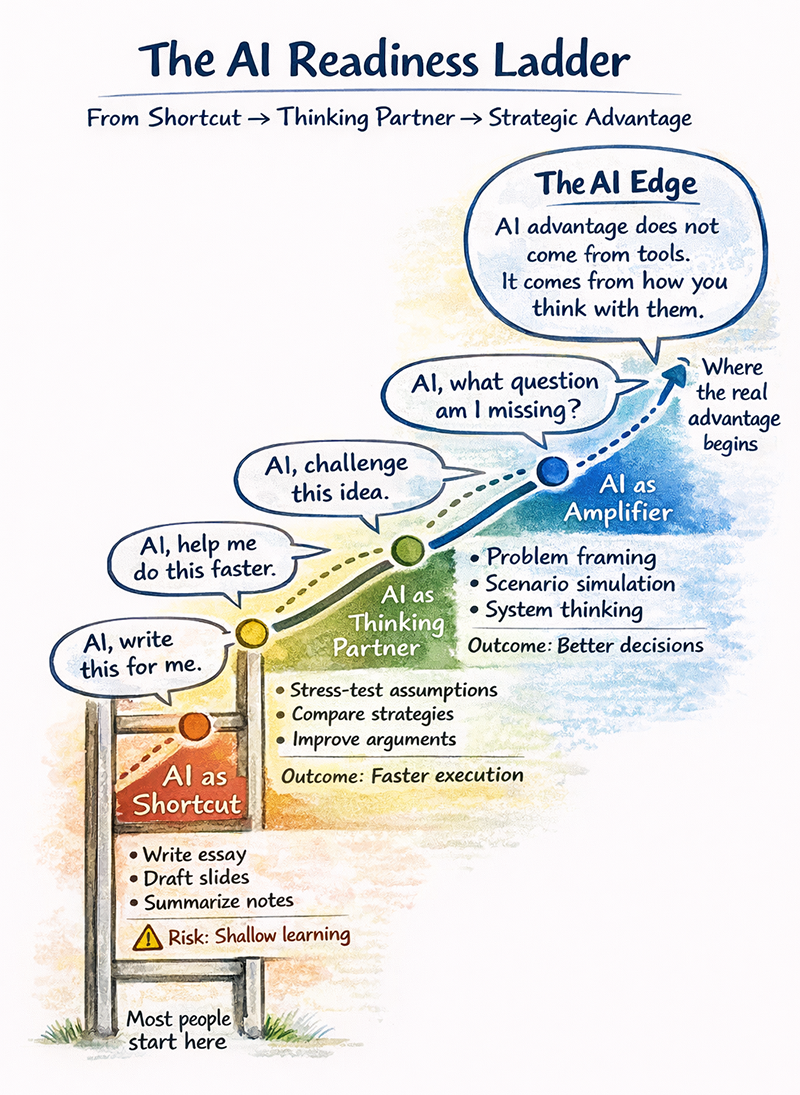
The professionals who thrive will not be those who use AI as a shortcut.
They will be those who use it as a thinking partner.
3–2–1: Breaking the Plateau
The real question for students is therefore not whether AI will exist.
It is whether your MBA prepares you for this new kind of work.
- 1. AI is changing tasks faster than it is eliminating jobs.
Most roles are evolving — not disappearing. - 2. Entry-level professionals are expected to contribute judgment sooner.
Firms now expect juniors to interpret insights, not just produce analysis. - 3. The advantage is shifting from execution to thinking.
Those who frame problems and question outputs will stand out.
- • Next time you use AI for an assignment or project, ask it for three different approaches to the same problem. Then evaluate which one makes the most sense and why.The goal is not to get the answer — but to ?practice judgment.
- • Ask AI to critique your own work. Paste a presentation outline or case analysis and ask: "What assumptions am I missing?"Often the best insights come from challenging your first answer.
1. If AI can already produce a first draft of almost anything —What capability are you building that AI cannot easily replicate?Clarity? Judgment? Communication? Problem framing? Your answer to that question will shape your career.
Book Byte
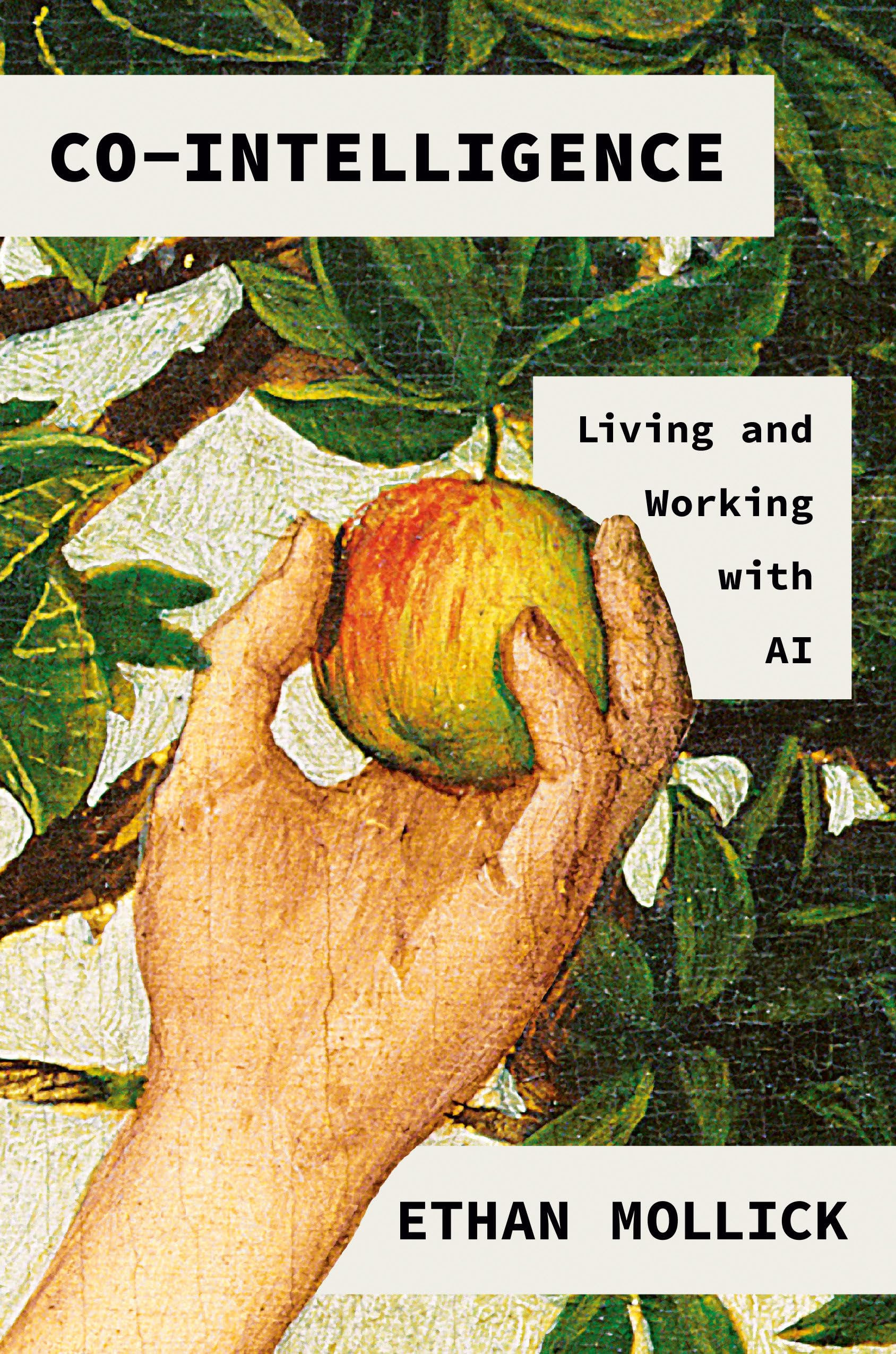
Co-Intelligence – Ethan Mollick
Mollick argues that AI works best when treated as
collaborator, not an answer machine.
Instead of asking: "Is this correct?" Mollick suggests asking:
"What assumptions is this making?"
"What might this be missing?"
"How could this be improved?"
In other words, the real skill is not getting answers from AI. It is interrogating them.
AI can accelerate analysis, writing, and research. But the professional advantage still comes from judgment — the ability to question, refine, and improve what the machine produces. Co-intelligence is not about outsourcing thinking.
It’s about working with AI to think better.
In Practice: AI in Action
At FIIB, we’re increasingly seeing both students and faculty treat AI not as a shortcut, but as a tool for deeper thinking and experimentation.
Two recent examples illustrate the shift.

A student recently worked on a project modelling how a restaurant could allocate its advertising budget across television, radio, and online media.
The real challenge wasn’t building the model.
It was deciding:
- • Which variables actually matter
- • How to balance multiple constraints
- • How to translate business goals into a decision model
Analytical tools accelerated the calculations.Thinking shaped the strategy.

In a recent class, a faculty member experimented with AI while preparing a case discussion.
Instead of summarising the case, AI helped generate alternative analytical prompts linked to a management model.
The result in the classroom was different.
Students had to:
- • Map the case to the communication model
- • Identify sources of breakdown and “noise”
- • Challenge assumptions in the situation
The discussion became sharper.
More structured.
More analytical.
AI didn’t teach the class.
It helped design better questions.
Extend the Learning
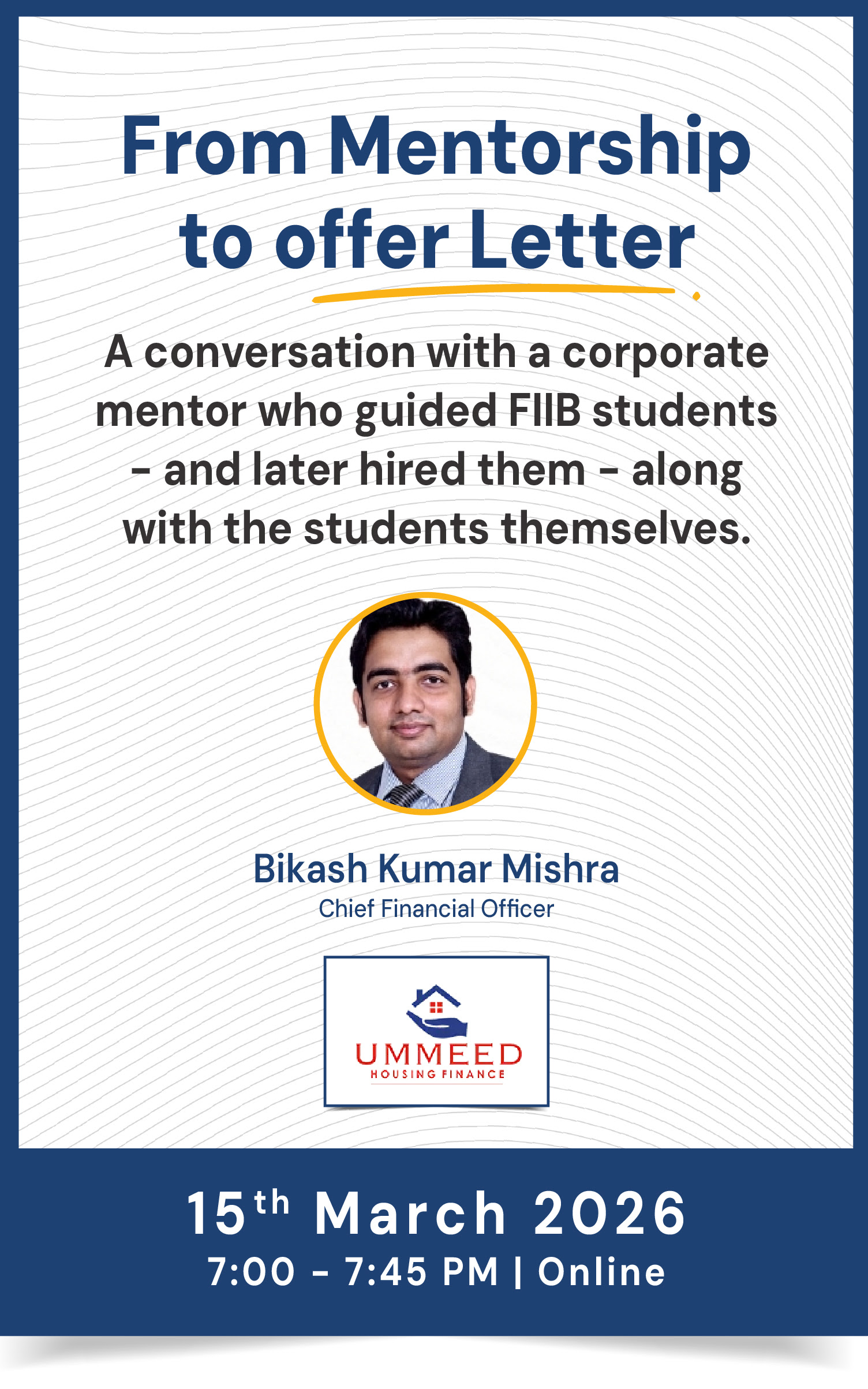
This Sunday, we host a masterclass exploring how structured mentoring often translates into real hiring decisions. Hear from industry mentors and students on what turns feedback into placement offers.
Register or receive the recording →In Closing
AI will keep improving.
The real question is whether our thinking keeps pace.
If you’re a current student — what capability are you building to stay relevant?
If you’re considering FIIB — what kind of learning environment would prepare you for an AI-shaped career?
Reply and tell us. I read every thoughtful response — and many shape what we build next.
And if this made you think differently, consider forwarding it to someone preparing seriously for the future.
Until next week,
Keep questioning. Keep thinking.
Warm regards,
Dr. Radhika ShrivastavaPresident & CEO, FIIB