
The Career Advantage Most Students Overlook

Think Forward is a short weekly note on careers, learning, and leadership in a changing world of work. Written by FIIB President Radhika Shrivastava, it shares practical ideas, frameworks, and real stories to help students think more clearly about their professional journeys.
⚡ A 10-SECOND CHECK
When choosing internships or roles, what matters most to you right now?
Reply A / B / C / D — next week we’ll share what the community said.
The Big Idea
Most students approach career decisions with a simple goal:
choose the “best” option.
The best company.
The best role.
The best package.
That instinct is understandable.
But early in your career, something else matters just as much.
Simply put:
What does this choice enable next?
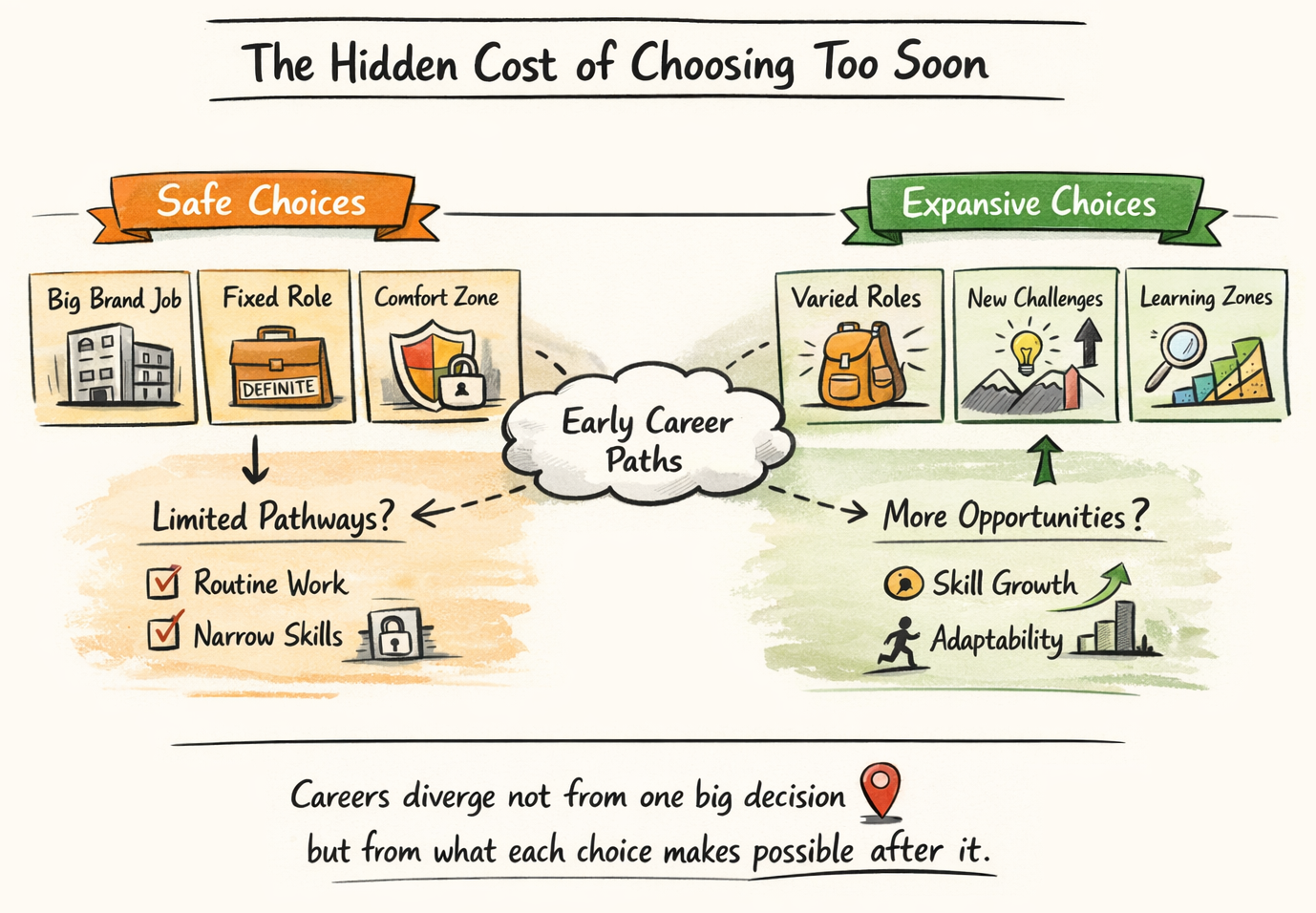
The Hidden Cost of Choosing Too Soon
Many students optimise for certainty too early.
They choose:
familiar brands, clearly defined roles, and paths that feel “safe.”
These decisions often look strong from the outside.
But they come with a hidden trade-off:
👉 They reduce exploration too early.
A role can give you experience.
But the right role gives you optionality.
And over time, careers don’t diverge because of one big decision.
They diverge because of what each decision makes possible after it.
What the World Now Rewards
Careers today are far less linear than they used to be.
McKinsey & Company has pointed out that modern careers are increasingly portfolio-driven, not path-driven.
The advantage is not just choosing well once.
It is building the ability to adapt, shift, and grow across roles over time.
Sheryl Sandberg described this clearly:
Careers are not ladders. They are jungle gyms.
Progress comes not just from moving up —
but from moving across, experimenting, and learning.

But exploration alone is not enough.
At some point, you need to make sense of what you’re experiencing —
and decide where to go deeper.
Indra Nooyi describes strong decision-making as the ability to “zoom out and zoom in.”
- Zoom out — to understand the larger direction.
- Zoom in — to understand the details that make it work.
Most early career mistakes happen when you do only one.
Either you chase big names without understanding the role.
Or you get lost in execution without seeing where it leads.
Strong decisions require both.

This is not abstract.
It shows up very clearly during an MBA.
You will face decisions like:
- • Which specialization to choose
- • Which internship to pursue
- • Which roles to prepare for
And the pressure to “get it right” starts early.
What Good Decisions Actually Look Like
A strong MBA experience doesn’t force early certainty. It creates space to:
- • Explore multiple directions
- • Test different capabilities
- • Understand where your strengths actually lie
And then — just as importantly — it helps you commit with clarity.
The Balance That Matters
Because optionality alone is not enough. At some point, you must:
- • Choose a direction
- • Build depth
- • Develop real capability
The difference is:
👉 when you choose
👉 and how informed that choice is
A Simple Way to Think About It
Early in your career: Explore broadly.
Then commit deliberately.
This visual captures a simple but powerful idea: Early career decisions are not endpoints. They are option creators. Some paths compound opportunity. Others optimize too early — and limit it.
3–2–1: Career Decisions
- 1. Optimizing only for the outcome (brand, salary):
But not for what you will actually learn. - 2. Not knowing what skills you’ll build:
If learning is unclear, growth usually is too. - 3. Limited ability to pivot later:
Good early decisions usually increase flexibility.
- • Choose environments, not just roles:
The right environment shapes how you think—not just what you do. - • Focus on skill-building alongside outcomes:
Outcomes matter, but skills determine what comes next.
Before saying yes, ask: “What will this make possible for me next?”
Book Recommendation
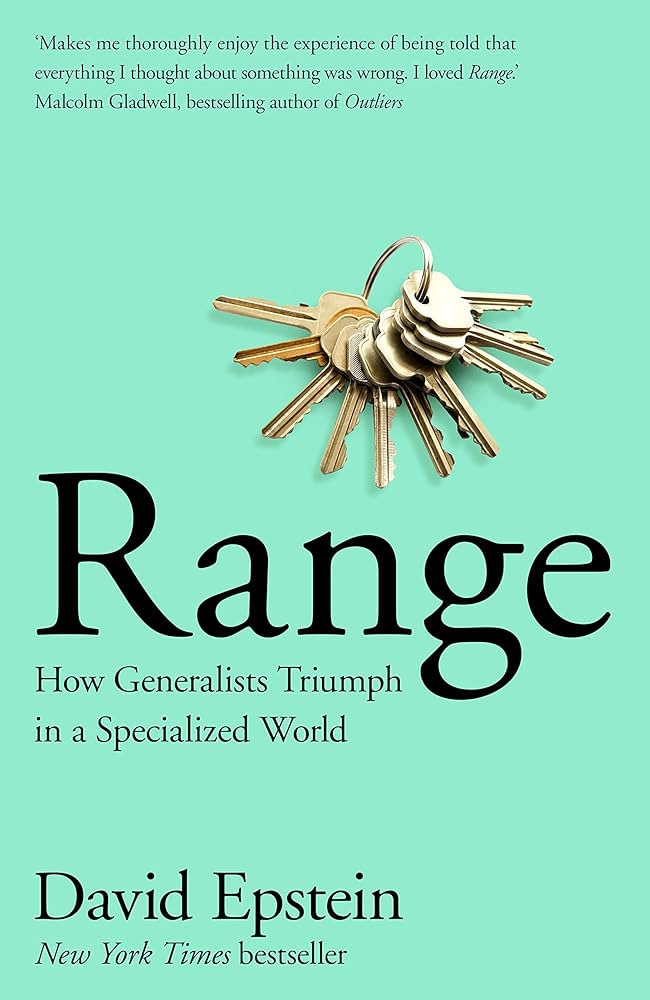
Range by David Epstein
Epstein shows that in complex fields, people who explore broadly early in their careers often outperform early specialists later.
Because they develop:
- • better pattern recognition
- • stronger adaptability
- • wider perspective
For MBA students, this is a powerful reminder:
Exploration is not a delay.
It is preparation.
In Practice: Building Optionality
While Committing

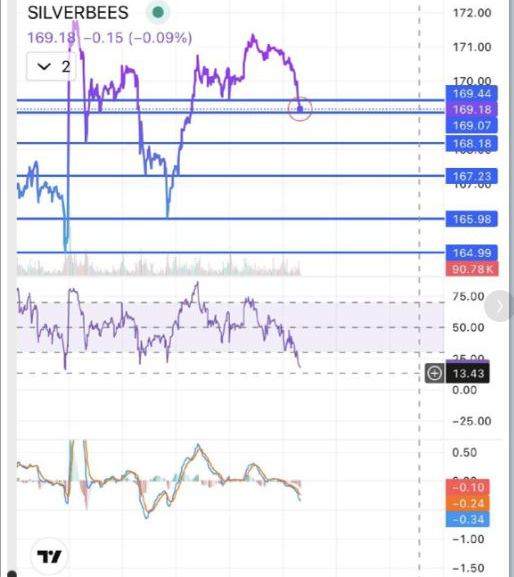
Case Study 1 - Good decisions are not predicted.
They are built — one signal at a time.
One of our faculty describes her approach to trading in a simple way:
She doesn’t predict.
She defines key levels, waits for the right moment, reads how things behave —
and acts only when signals align.
No prediction.
Just process.
The same applies to careers.
Because the goal is not to be right on day one.
It is to build the ability to make better decisions over time.

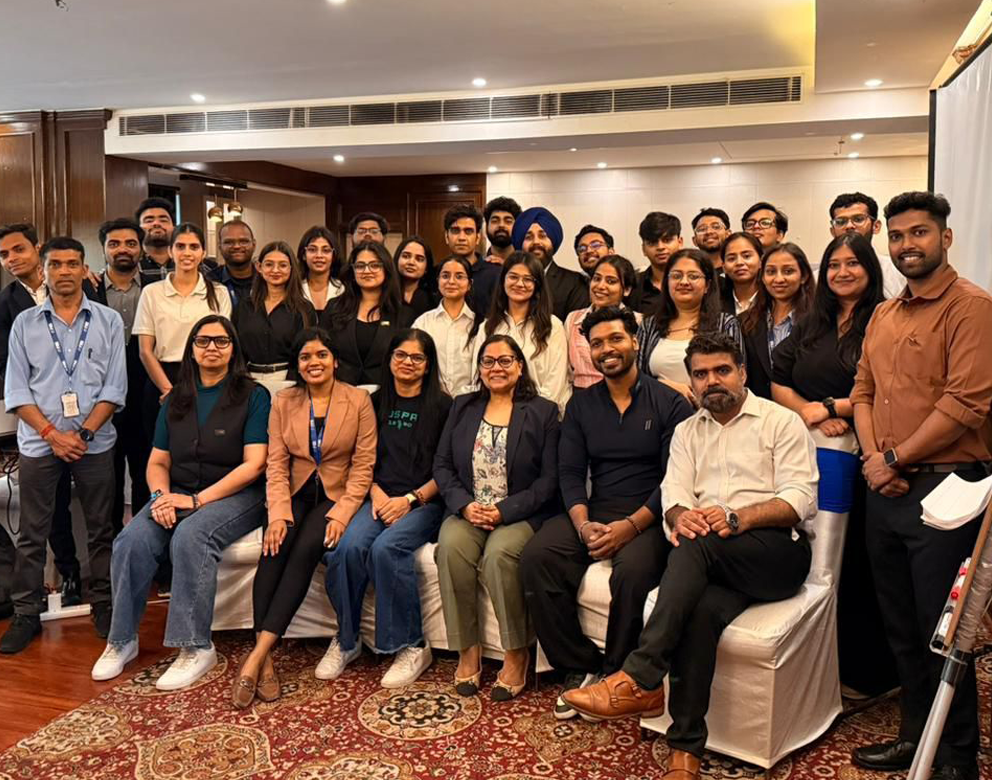
Case Study 2 - Better decisions start with better
thinking — not faster answers.
A recent student council session on design thinking focused on a simple shift:
Don't rush to solutions.
Spend time understanding the problem.
Through hands-on exercises, students learned to:
- • look at situations from different perspectives
- • test ideas before committing
- • build structured approaches to solving problems
The insight was simple: better thinking leads to better decisions
These are small decisions. But they reflect a larger mindset:
commit to outcomes — while continuing to expand your options.
Extend the Learning
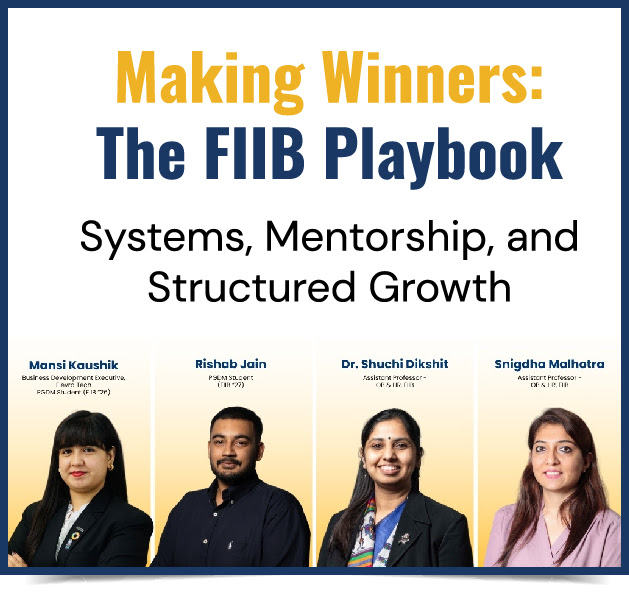
Upcoming Session
Making Winners: The FIIB Playbook
What this session will unpack
- • How FIIB supports growth through systems, not chance
- • Why mentorship and structured exposure matter early
- • How students build confidence, visibility, and career readiness
- • What transforms classroom participation into professional readiness
Date: 29th March 2026 | Time: 07:00 PM in India
Register here: Please Click
A Final Thought
The goal is not to delay decisions. The goal is to make better-timed decisions.
If you are a current FIIB student — what are you doing today to expand your future options alongside your immediate goals?
If you are considering FIIB — what kind of environment would help you explore, and then commit with clarity?
Read & Reply. I read every response. Each week, I send a book to a few readers whose reflections stand out.
And if this made you think, forward it to someone navigating early career decisions.
Because strong careers are not built by one perfect choice. They are built by what each choice makes possible next.