

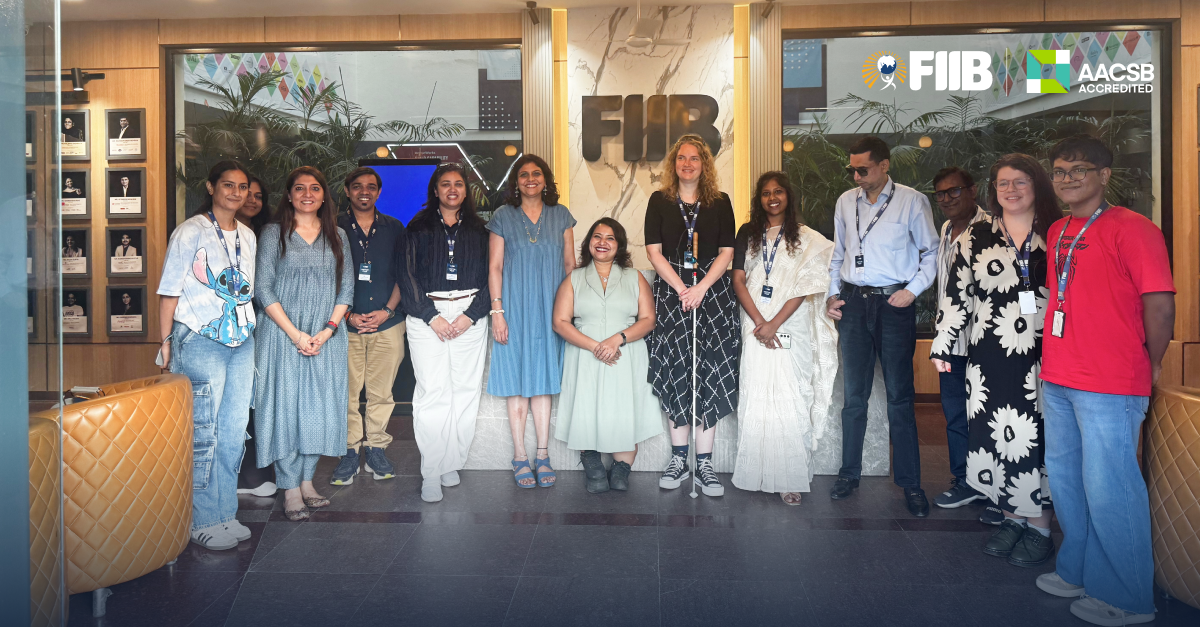
The Center for Responsible Management, with the PRME Working Group on Disability, Neurodiversity and Mental Health Inclusion, brought together voices from across India’s disability ecosystem to reflect on a decade of the Act and what must come next.
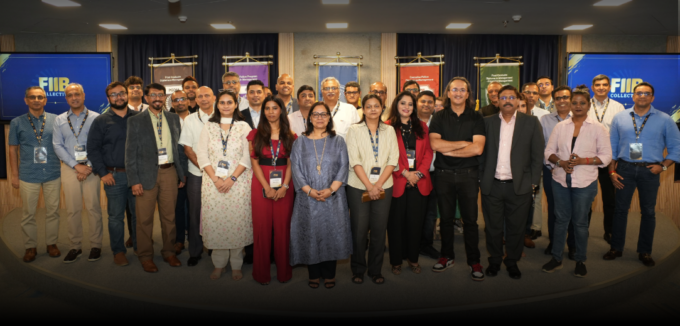
New Delhi: As India marks ten years of the Rights of Persons with Disabilities (RPwD) Act, 2016, the Center for Responsible Management (CRM) at FIIB, in collaboration with the PRME Working Group on Disability, Neurodiversity and Mental Health Inclusion, convened a close-knit Roundtable on 7 October on the future of disability inclusion in India.
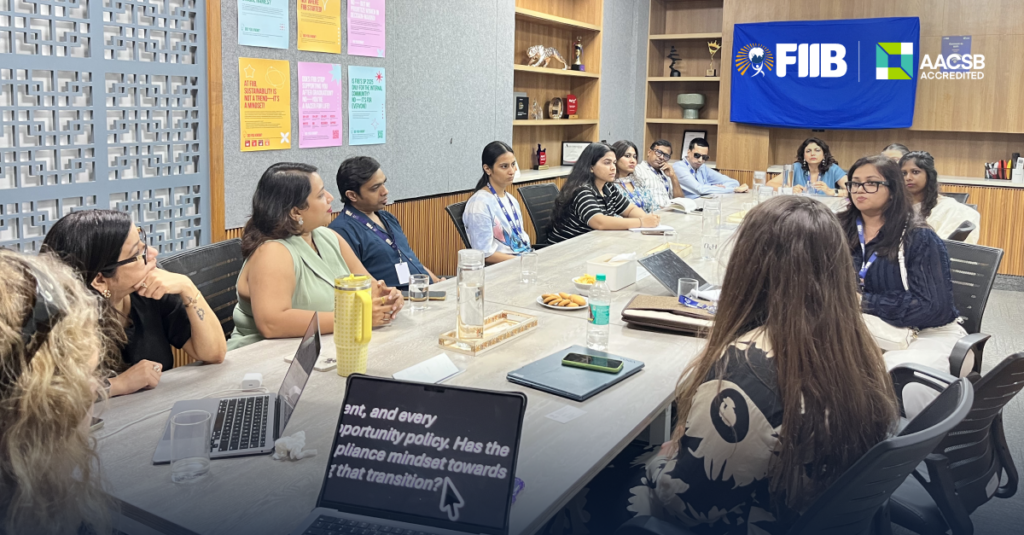
The RPwD Act replaced India’s earlier disability legislation following the country’s ratification of the UN Convention on the Rights of Persons with Disabilities (UNCRPD), giving disability inclusion a rights-based framework. A decade on, the Roundtable set out not only to look back, but to ask what the next ten years should achieve.
A conversation shaped by lived experience, enterprise and policy
The Roundtable was convened by Prof. Anica Zeyen, Professor of Entrepreneurship and Inclusion at Royal Holloway, University of London; Prof. Kokil Jain, Dean-Research at FIIB; and Prof. Snigdha Malhotra, Assistant Professor (OB & HR) and Center Head – CRM at FIIB, who guided the dialogue throughout the session.
Around the table were persons with disabilities, founders, practitioners, advocates and inclusion professionals, including Danish Mahajan (Founder, RadioUdaan), Sarah Berry (Partner, SVP India), Ishita Dhar (Assistant Manager, Spark Minda Foundation), Shruti Pushkarna (Founder & CEO, Karuneti Consulting), Nivetha R S (Assistant Manager, Disability Inclusion, Eternal), Surashree Rahane (Founder, DiverseAbility Founders Lab), Amol Bagul (Co-Founder, DiverseAbility), Anubha Singhal (Founder & Principal Architect, Enable Me Access) and Anuja Rani (Disability Inclusion Adviser, International Committee of the Red Cross).
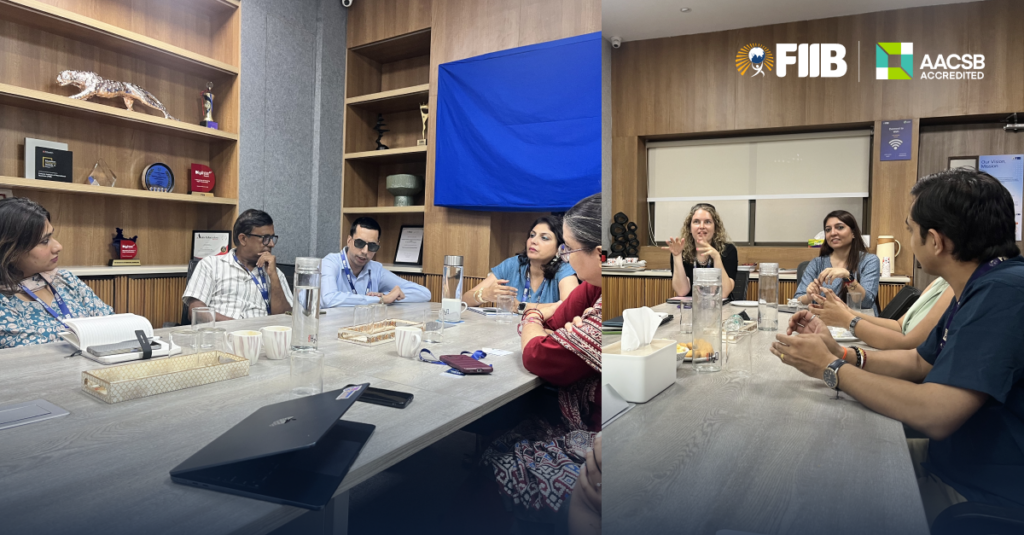
Three questions that anchored the dialogue
What has the Act enabled, and what remains untouched?
Participants reflected on the changes the Act has made possible, while identifying areas where the aspirations of disability rights still need far greater attention.
From compliance to inclusion: where do we stand?
The discussion explored the gap between meeting statutory requirements and creating genuinely inclusive environments across workplaces, institutions, infrastructure and technology.
What should the next ten years look like?
Looking ahead, participants shared what they hope to see from the Act, institutions, businesses and the wider ecosystem, moving the conversation from reflection towards action.
Why a Business School belongs in this conversation
Much of what determines whether a workplace is truly inclusive is not written in law. It is decided in how a job description is framed, how an office is designed, how a product is built, and who gets hired and promoted. These are management decisions, made every day by the people leading teams and organisations.
The Act made inclusion a right. Making it real will take leaders who notice where exclusion happens and choose to act differently. Through its Center for Responsible Management and its commitment as a PRME signatory, FIIB works to ensure that responsible leadership takes root from a student’s very first day, so it shows up in every room its graduates go on to lead.
As the RPwD Act enters its second decade, the Roundtable closed on a question for everyone in the ecosystem: what do we want the next ten years of disability inclusion to achieve, and what will each of us do to make it possible?












Leave a comment