
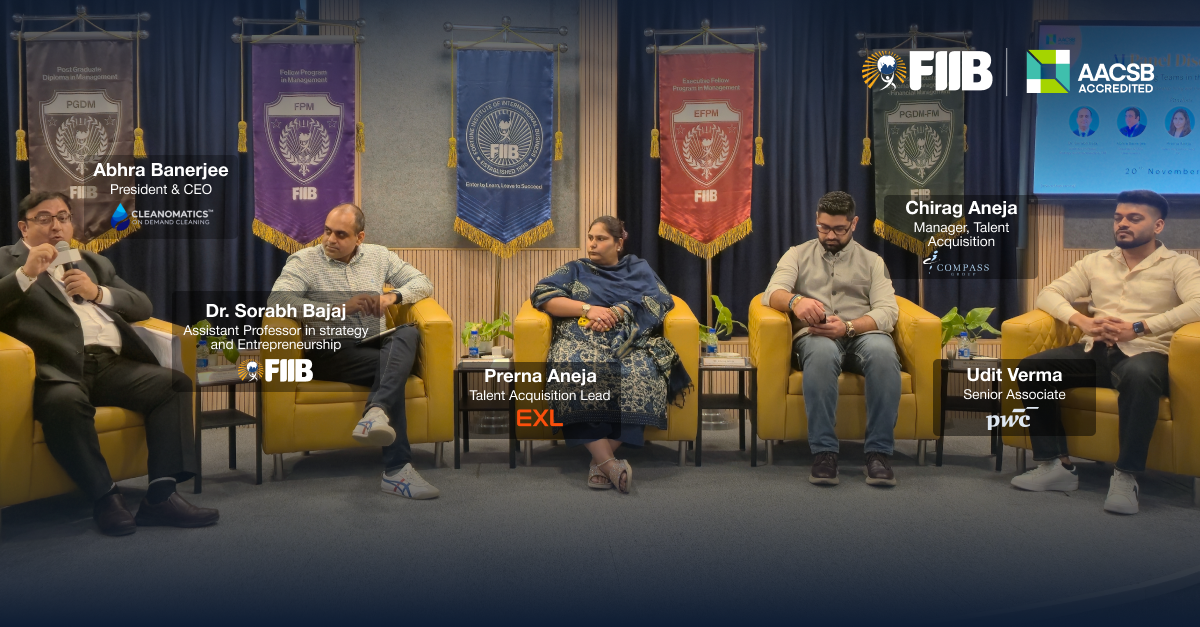
New Delhi, 20 November 2026: Before FIIB’s panel on managing teams in the age of AI had even begun, AI had made its first mistake. While researching the speakers, an AI tool confidently credited one panelist with founding two Y Combinator start-ups. A quick fact-check showed the claim was false. For the panel, that set the agenda: when AI does more of the work, who is accountable for it?
“You will use AI. Of course, you have to use AI. But then, how do you manage AI, and who is taking accountability for its results?” asked Abhra Banerjee, President & CEO, Cleanomatics, as the discussion opened, warning that tomorrow’s managers may lead teams of eight or twelve people alongside many more AI agents. The question matters to every PGDM student preparing to lead a team.
“Managing Teams in the Age of AI” was organised and led by the FIIB Student Council (PGDM Batch 2026–28). The panel brought together Abhra Banerjee, President & CEO, Cleanomatics; Prerna Aneja, Talent Acquisition Lead, EXL; Chirag Aneja, Manager, Talent Acquisition, Compass Group; Udit Verma, Senior Associate, PwC; and Dr. Sorabh Bajaj, Assistant Professor, Strategy & Entrepreneurship, FIIB.
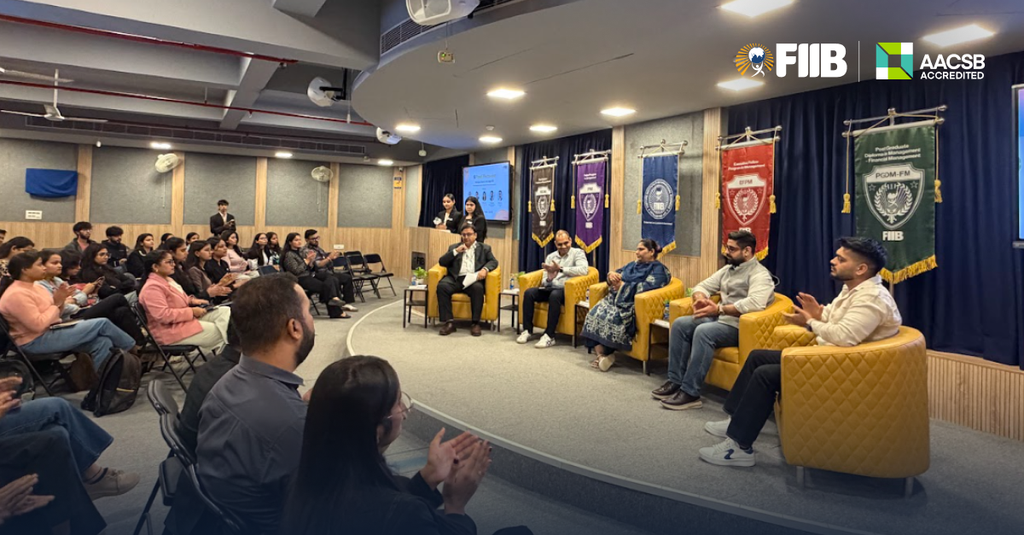
Dr. Sorabh Bajaj expects the change to reach freshers early. “Management as a concept will not change. Whether the work is being done by a machine or a human, you will have to start learning to manage different agents,” said Dr. Bajaj, predicting that first-time-manager training could move from year six of a career to year two.
The hiring leaders were just as direct. “Being extraordinary is the only survival code I know,” said Prerna Aneja, urging students to build skills beyond their degree. Chirag Aneja, named communication, analytical ability and emotional intelligence as the parameters that matter most in hiring. Describing automation in kitchens that serve 30,000 to 40,000 meals a day, Chirag Aneja said, “We are bringing automation at the ground-staff level so that we can elevate the people. Not exit them, elevate them with training.“
On whether companies should count AI use in performance reviews, Udit Verma, argued in favour. “Appraisals have to be on the basis of how much you’ve learned and what you’ve contributed with AI,” Udit Verma said. “You have to work alongside AI. It’s not that AI is going to take your job completely.“
Students then took on the panel, arguing for and against statements such as “In five years, the best manager in a company will be managing more agents than people.” In a rapid-fire round on the human skill that will matter most in 2030, the panel picked emotional intelligence as the best answer.
“AI rarely fails with an error message. It fails with a confident answer,” said Dr. Shardul Shankar, Faculty Lead, Center for Innovation, Entrepreneurship & Technology (CIET), FIIB. “The skill our students need most is the habit of checking: question the output, test it against evidence and own the final decision. That is what separates using AI from managing it.“
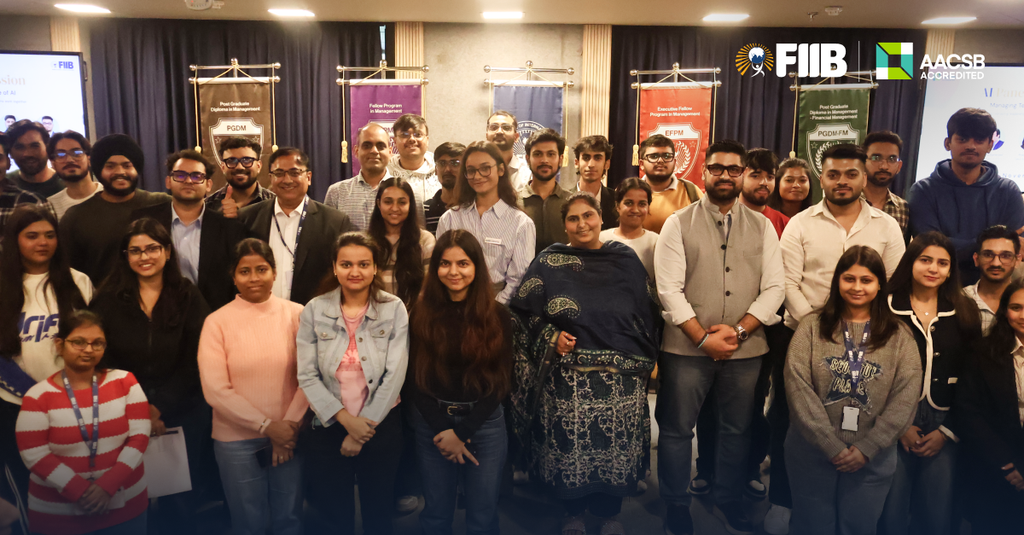
The conversation reflects how FIIB approaches AI. Rather than launching a separate AI specialisation, the institute has built AI into its learning system, FIIBX, across subjects. “Even if I give you a degree of MBA in AI, you will use it in marketing, finance or HR,” said Dr. Bajaj. “So why create a vertical and not a horizontal?“
For PGDM students, sessions like this connect classroom learning with how hiring decisions are actually being made. Students hear first-hand what recruiters expect and test their own arguments against industry leaders. They also learn to question AI’s answers rather than simply accept them. Through FIIBX, students use AI to solve business problems, check whether its output is reliable, and stand behind their final recommendation.














Leave a comment