

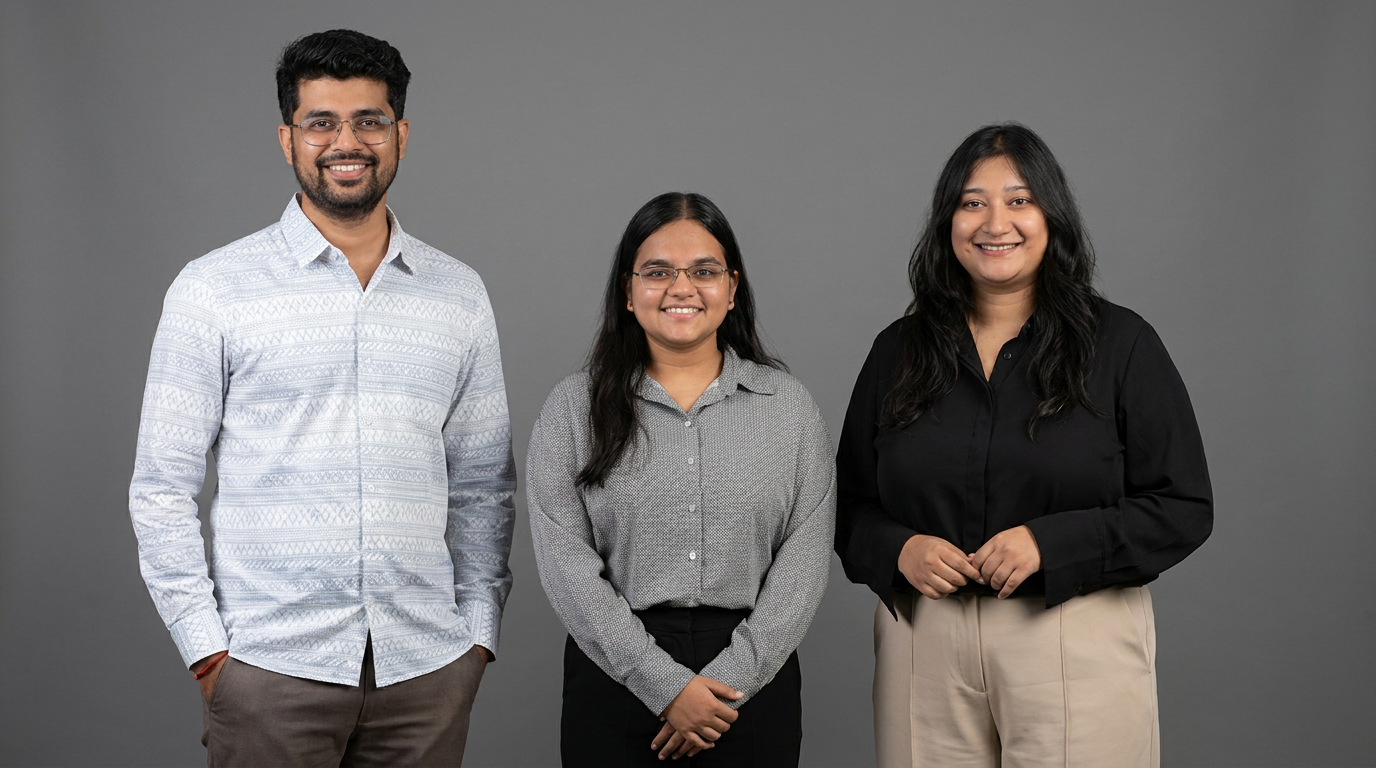
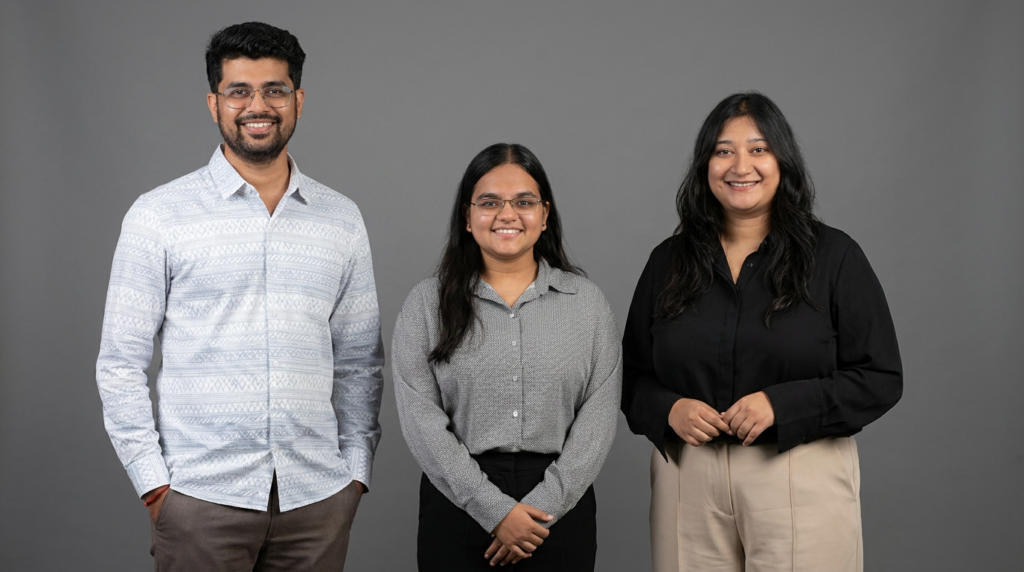
Most student projects end with a submission. This one ended in a room with Zomato’s CSR Head and senior management team. During FIIB’s Social Internship Program 2026, three students were handed a research brief that would not have looked out of place on a consulting engagement: is air pollution a business opportunity or a threat? Kanchan Negi, Rachita Lohiya and Diptayan Halder spent the internship answering it, and presented their findings to the company that asked the question.
A brief written as a question, not an assignment
The project came to FIIB from Zomato, whose parent company, Eternal, sat at the centre of the question the students were asked to investigate: is air pollution a business opportunity or a threat? The deliverable was a 20 to 25 slide presentation, built on data and visuals rather than opinion, and the scope of what it had to cover made clear early on that this was not a coursework exercise dressed up as industry exposure.
For Diptayan, that distinction was the defining feature of the experience. “The experience was different from a regular academic project because we got the opportunity to work on a real business problem through Eternal,” he says. The problem also turned out to be closer to the company’s operations than the label “environmental issue” suggests, and he found himself examining “how an issue like air pollution can affect logistics, delivery timelines, supply chains and the overall efficiency of operations.”
Ten questions the team had to answer
The brief set out its demands in sequence. The team began with the history and causes of air pollution in Delhi NCR, establishing when the problem first emerged, what drives it and why it continues to worsen. From there they examined the policies and programmes successive Delhi and central governments have introduced, assessing not only what each approach attempted but how it performed and why so many of them have fallen short.
Three deep dives followed. On stubble burning, the team had to move past the headline and ask why farmers burn at all, why the practice persists even where it harms their own families, what Punjab has tried in response and what the farmer’s perspective actually is. On vehicular pollution, they mapped the pollutants that exhaust produces, which vehicle categories contribute most, and the percentage share of the problem each accounts for across Delhi NCR. On construction dust, they examined the specific contribution of construction activity and the record of the interventions aimed at it.
The second half of the brief asked them to look outward and then forward. They studied policy solutions from other countries, identifying which of those countries face conditions comparable to Delhi NCR and what those policies require in order to work. They assessed technology solutions already deployed globally against cost, efficacy and efficiency, including whether any produce viable by-products that could be sold while curbing pollution. Only then did the brief turn to the company itself: the risks and opportunities air pollution presents to a business like Eternal, what the company should launch in the short term in 2026, what such a programme would likely cost, how it should be branded, and what the position should look like by 2030.
Research, stakeholders and the discipline of a real answer
Working through a brief of that range required the team to hold several perspectives at once, which is the part Rachita identifies as the most valuable. “For me, SIP was valuable because it gave us a chance to apply what we learn in class to a real-world problem,” she says. “We had to research the issue, understand different stakeholders, and think about how a company like Eternal could respond in a responsible way.”
That framing changed what the analysis was for. A recommendation on stubble burning is not complete without the farmer’s position; a recommendation on vehicular restrictions is not complete without the households and livelihoods attached to those vehicles. As Rachita puts it, the project “made me look at how business decisions affect people, employees and the wider community,” and what SIP ultimately brought together was “research, problem-solving and responsible management in a way that felt much more connected to the real world.”
Learn, Engage, Lead, Impact
For Kanchan, the Zomato project sits within a wider body of work across the year. She served as a Student Ambassador for the Centre for Responsibility Management, onboarding more than ten social sector organisations during SIP 2026 and contributing to inclusive workshops on disability inclusion and LGBTQIA+ awareness. Her own social internship with PVR Nest took her into five underprivileged communities across Delhi NCR, working on livelihood, skill development, sanitation and community outreach.
She also served as a Student LEA for the Positive Impact Rating 2026, engaging students in the PIR process and contributing to FIIB achieving Level 5, the highest rating available. Seen alongside the Zomato project, which she describes as “connecting environmental challenges with ESG, CSR and SDGs,” the pattern she draws is a deliberate one.
“FIIB’s pedagogy has transformed responsible management for me from a classroom concept into practical experience and action,” Kanchan says. “For me, FIIB has made responsible management a journey of Learn, Engage, Lead and Impact, rather than just something we study.”
The Social Internship Program Takeaway
The team presented its findings to Zomato’s CSR Head and senior management team, where the work was well received and appreciated. For a student project, that is a meaningful outcome in itself, though the more durable result is what the three of them now know how to do: take an ambiguous public problem, research it to the point where the causes are separable, test what has already been tried, and translate all of it into recommendations a company can act on with a budget and a date attached.
That is the outcome for the Social Internship Program in a sentence. As Diptayan puts it, the project gave him the chance to “connect what we learn in class with an actual business environment and think about solutions that can work at scale,” which is precisely the distance an MBA is meant to close.








Leave a comment