

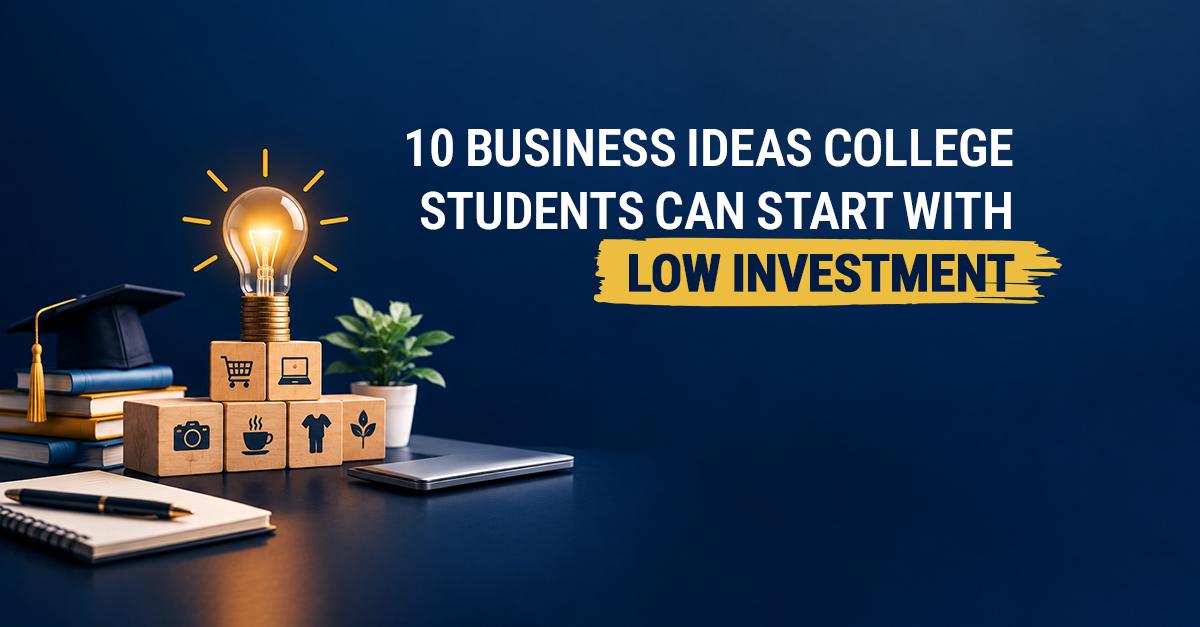
What Are Business Ideas for College Students With Low Investment?
Business ideas for college students with low investment are ventures a student can launch with minimal cash, relying mainly on existing skills, a phone or laptop, and spare time. They typically earn through services, teaching, or small-batch products. Most can run alongside classes and be tested with a first customer before any major spending.
Why Low-Investment Business Ideas Matter in 2026
Low-investment ideas matter because they let you learn a business before you risk savings. A failed experiment that cost you a few weeks teaches more than a plan that never started.
Interest in student entrepreneurship and freelancing in India keeps growing. The practical effect is a crowded field, so a clear niche beats a generic offer.
Among the low investment business ideas India offers students today, the strongest rely on a skill you already hold. They also build transferable skills: pricing, selling, and handling customers. Those skills help in any career, whether or not the business lasts.
Service Businesses You Can Run From a Laptop
Service businesses cost the least to start because your skills are the product. Costs stay mostly in tools and your time.
1. Freelance Content Writing
Write blog posts, product descriptions, and web copy for small businesses.
Starts with: a laptop, three writing samples, and a freelance profile.
As a business plan: pitch a content studio for one industry, with a repeatable process and a client retention model.
2. Social Media Management
Run posting calendars and replies for local shops, cafes, and coaching centers.
Starts with: a phone, a free design tool, and one pilot client.
As a business plan: sell fixed monthly packages, then show how a small team handles several accounts.
3. Graphic and Presentation Design
Create logos, posters, and pitch decks for student startups and small sellers.
Starts with: design software with a free tier and a portfolio of mock projects.
As a business plan: turn common requests into templates for one defined buyer.
4. Video Editing for Creators and Brands
Edit reels and short videos for creators and small brands.
Starts with: an editing app and a sample reel.
As a business plan: offer fixed turnaround times and per-video pricing, then show how a team shares the workload.
5. Photography for Small Sellers
Shoot products and events for online sellers.
Starts with: a phone camera, natural light, and a simple backdrop.
As a business plan: sell shoot bundles to sellers in one neighborhood or marketplace, with costs set per shoot.
Teaching and Skill-Sharing Businesses
Teaching businesses turn knowledge you already have into a paid service. You need credibility more than capital.
6. Online Tutoring and Doubt-Solving
Teach school or college subjects to individuals or small groups.
Starts with: a subject you know well, a video call tool, and a fixed schedule.
As a business plan: move from one-to-one sessions to small batches with recorded material, so revenue grows faster than your hours.
7. Resume and Portfolio Services
Help peers with resumes, LinkedIn profiles, and portfolios.
Starts with: templates and three before-and-after samples.
As a business plan: package it for one campus cohort, then explore a partnership with a college placement cell.
Product and Reselling Businesses
Product businesses add stock and logistics, so test demand before buying inventory. Pre-orders protect your cash.
8. Thrift and Resale
Curate and sell pre-owned books, clothing, or gadgets through social channels.
Starts with: items you already own, then pre-orders for sourced items.
As a business plan: show sourcing, pricing, and a returns policy as a repeatable system.
9. Handmade and Print-on-Demand Products
Sell custom stationery, jewelry, or printed merchandise through an Instagram store.
Starts with: samples and pre-orders. Some print-on-demand providers produce an item only after an order.
As a business plan: define a niche audience, unit cost, and margin per item.
10. Homemade Food and Baking
Sell small-batch baked goods or meal boxes to hostel and neighborhood customers.
Starts with: a home kitchen, a tested menu, and pre-orders. Food sellers in India need FSSAI registration or a license depending on scale.
As a business plan: show food cost per portion and order batching.
How the Ten Ideas Compare
The ideas differ mainly in what you spend and how they grow. Use the table to match an idea to your resources.
| Idea | Main asset | Where the cost goes | How it can scale |
| Content writing | Writing skill | Tools, platform fees | Small team, niche focus |
| Social media management | Platform know-how | Design tools | Monthly packages, more accounts |
| Graphic design | Design skill | Software | Templates, repeat clients |
| Video editing | Editing skill | Software, storage | Team of editors |
| Photography | Camera and eye | Props, travel | Shoot bundles |
| Online tutoring | Subject knowledge | Platform, material | Batches, recorded content |
| Resume services | Writing, templates | Minimal | Cohort partnerships |
| Thrift and resale | Sourcing ability | Stock, packaging | Curated catalog |
| Handmade and print-on-demand | Design or craft | Materials, printing | Niche brand |
| Homemade food | Cooking skill | Ingredients, packaging, compliance | Batching, small kitchen |
How to Test an Idea Before You Spend
You test an idea by selling before you build. The goal is evidence from one real customer.
- Name one customer and one problem. Write it in a sentence.
- Sell before you build. Take a pre-order or run a pilot with one client.
- Write a cost sheet. List what each order costs you and what you charge.
- Run a short trial. Serve a few customers and note what went wrong.
- Record the result. Keep the numbers, because they become your plan.
How to Turn an Idea Into a Business Plan
A one-page plan covers five things: problem, customer, offer, economics, and a path to grow. If you can write it plainly, a panel can judge it.
- Problem and customer: who struggles with what, and how you know.
- Offer: what you sell and how it differs from alternatives.
- Economics: price, cost per sale, and what remains.
- Path to grow: how you serve ten customers, then a hundred.
A pure freelance idea can look small on paper. Showing how a team, a template, or a batch model lets it grow makes it plan-ready. Meraki, FIIB‘s business plan competition, accepts early-stage ideas from teams of one to five students, and it looks for clear revenue potential and a defensible model. Read the details on the: Meraki page.
Who Should Start a Low-Investment Business?
Students with a skill, a first customer in mind, and a realistic schedule gain the most.
Best suited for:
- Students who want to earn while studying without large savings.
- First-time founders who want a low-risk test.
- Students with creative, technical, or subject skills to sell.
- PGDM and PGDM-FM aspirants who want to practice pricing and unit economics. Review the PGDM and PGDM-FM programs to see how finance training supports this.
Frequently Asked Questions
What are the best low investment business ideas for college students in India?
Strong options include freelance writing, social media management, graphic design, video editing, online tutoring, resume services, resale, handmade products, and home baking. They rely on skills or small stock rather than large capital. Choose the one that matches a skill you already have and a customer you can reach this month.
How much money do I need to start a business in college?
It depends on the idea. Service businesses such as writing, design, or tutoring need mainly a laptop or phone and a few tools. Product businesses add stock, packaging, and delivery. Reduce risk by taking pre-orders first, writing a simple cost sheet, and spending only after a customer commits.
Can I start a business while studying?
Yes. Many students run service or small-batch businesses alongside classes. Pick an idea that fits your timetable, set fixed working hours, and start with one or two customers. Pause new orders during exams. Check your college’s rules on commercial activity and keep your academics as the priority.
Do I need to register a business as a student?
Requirements depend on what you sell and how much you earn. Food sellers generally need FSSAI registration or a license, and some activities trigger tax or GST rules at certain income levels. Check current requirements on official government portals or with a qualified accountant before you scale beyond a small trial.
What are good side business ideas for students with no money?
Start with ideas that use skills rather than stock: freelance writing, tutoring, design, video editing, or resume services. You need a phone or laptop and a few samples. Offer a pilot to one client, collect feedback, then raise prices. Avoid paying for inventory or courses before you have a paying customer.
Which low-investment business ideas can become scalable startups?
Ideas that add a team, a template, or a batch model scale best. Examples include a niche content studio, a tutoring batch with recorded material, a curated resale catalog, or a branded merchandise line. Show how you serve ten customers, then a hundred, and what each extra customer costs you.
How do I turn a small business idea into a business plan?
Write one page covering the problem, your customer, your offer, your economics, and how you will grow. Use real numbers from a pilot: price, cost per sale, and what remains. A plan built on one paying customer is more credible than a plan built on assumptions.
What are the risks of starting a business in college?
The main risks are time pressure on academics, small early income, and spending money before demand is proven. Food and product businesses add compliance and stock risk. Limit risk by testing with pre-orders, keeping costs low, setting working hours, and following the rules for your activity.












Leave a comment