

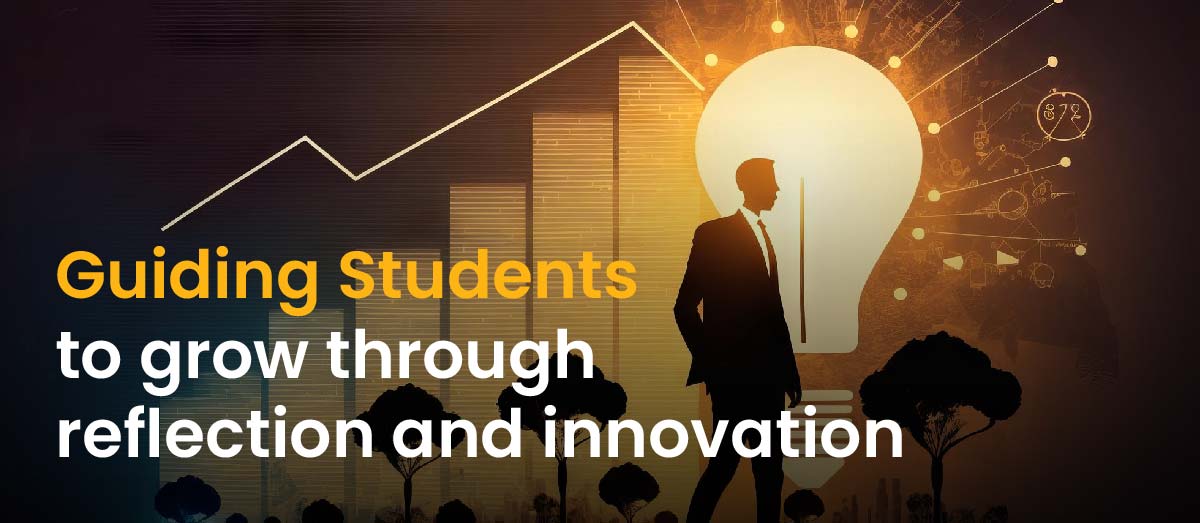
John Dewey once observed, “We don’t learn from experience, we learn from reflecting on experience.” This idea remains deeply relevant in modern education. Teaching today is no longer limited to delivering content; it involves constant reflection on classroom interactions, learning outcomes, and innovative practices. When educators consciously reflect on their methods, they not only refine their teaching but also create learning environments that are responsive to students’ real needs.
A Student-Centric Philosophy in Practice
Dr Sakshi’s teaching philosophy is rooted in a student-centric approach. Rather than applying a one-size-fits-all model, her sessions are designed around students’ varying learning abilities and academic backgrounds. This adaptability helps students clearly understand course objectives and progress toward them with confidence.
Students often possess potential that remains unrealized without timely direction. Recognizing this, Dr Sakshi integrates subject knowledge with structured guidance and counseling. This balance ensures that students are not only academically competent but also mentally prepared to make informed decisions about their future. Her commitment extends beyond the classroom, as she actively invests time and effort in offering comprehensive career and course advice tailored to individual aspirations.
Linking Education with Career Awareness
One of the defining aspects of Dr Sakshi’s approach is her emphasis on career clarity alongside academic learning. Students enrolled in the PGDM program are guided to understand the professional opportunities available to them upon completion of the course. This clarity enables them to align their academic efforts with long-term professional goals.
The support provided includes:
- Awareness of industry expectations and evolving job roles
- Guidance on selecting career paths aligned with personal strengths
- Counseling to help students make confident academic and professional choices
This holistic guidance empowers students to transition smoothly from academic life to professional environments.
Guided Practice as a Teaching Strategy
Dr Sakshi adopts the philosophy of “Guided Practice,” commonly described as the I do, We do, You do method. This approach was pioneered by Barbara Rogoff and emphasizes progressive student independence.
The structure of guided practice can be summarized as follows:
| Stage | Role of the Teacher | Role of the Student | Learning Outcome |
|---|---|---|---|
| I do | Demonstrates concepts and strategies | Observes and listens | Conceptual clarity |
| We do | Collaborates and guides | Participates actively | Skill reinforcement |
| You do | Observes and supports | Applies learning independently | Mastery and confidence |
Through this method, students move from observation to collaboration and finally to independent application, ensuring deeper understanding and retention.
Dialogue Teaching and Skill Development
Another key element of Dr Sakshi’s pedagogy is dialogue teaching. This approach encourages meaningful classroom discussions that help students develop cognitive strategies, critical thinking, and problem-solving skills. These competencies are essential not only for academic success but also for securing and sustaining quality employment in competitive corporate environments.
The impact of these teaching initiatives is visible in:
- Improved academic performance in evaluations
- Enhanced communication and analytical skills
- Successful corporate placements
These outcomes reflect the practical effectiveness of aligning teaching methods with real-world expectations.
Creating a Stimulating Learning Environment
With a strong academic record of her own, Dr Sakshi strives to cultivate a similar learning spirit among her students. As both educator and mentor, her goal is to provide a stimulating environment where students can grow intellectually, emotionally, and professionally.
Her teaching methodology actively engages learners through:
- Collaborative group projects that promote teamwork
- Thematic learning that connects theory with practice
- Individual assignments that encourage self-reflection and accountability
By activating multiple dimensions of learning, she ensures that students remain engaged, motivated, and prepared for future challenges.
Conclusion
Guiding students toward academic and professional excellence requires more than subject expertise. It demands reflection, adaptability, mentorship, and a deep understanding of student needs. Through a student-centric philosophy, guided practice, and career-focused mentoring, Dr Sakshi exemplifies an educational approach that empowers students to realize their potential and confidently shape their future.










Leave a comment