

Placements, rankings and fees get most of the attention when students compare business schools. Fewer ask what the faculty are working on. That question says a lot about what you will actually learn.
When students shortlist a PGDM, the comparison usually starts with outcomes: placement figures, average salaries, and recruiter lists. Those numbers matter. But they describe where a program ends, not what happens inside it for two years. A large part of that experience depends on who is teaching you and how close they are to the questions business is still working out.
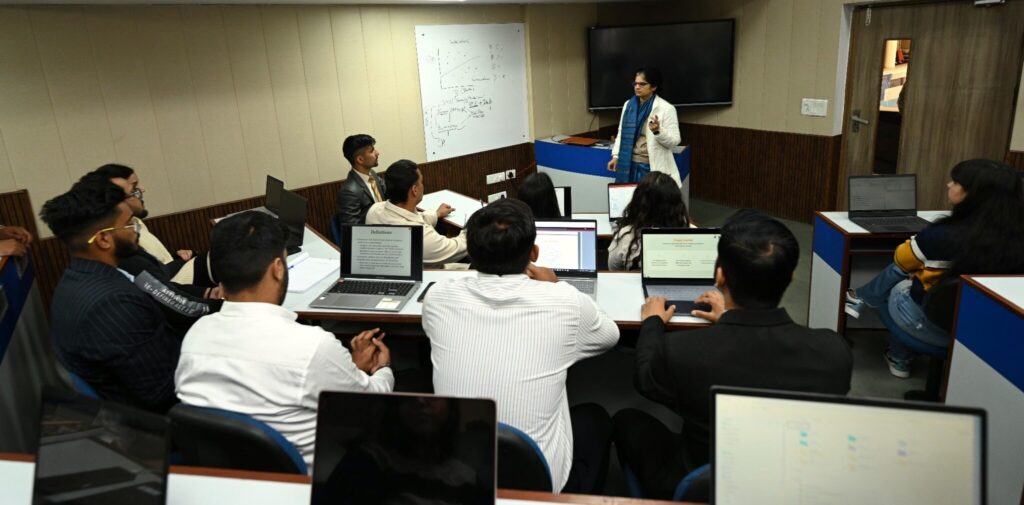
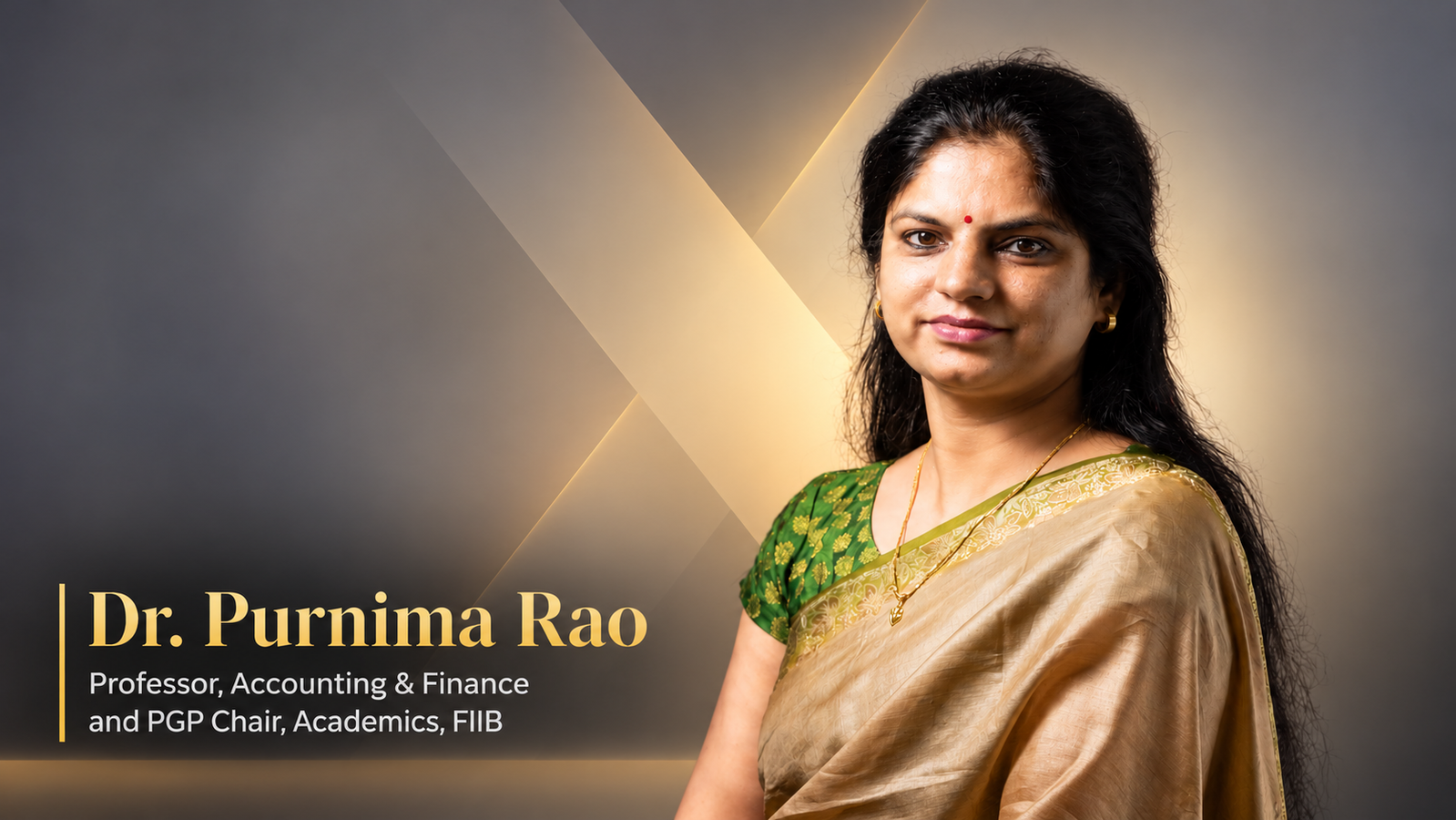
That is where faculty research comes in. At Fortune Institute of International Business (FIIB), New Delhi, research is part of how faculty teach, not something kept apart from it. A recent example is the work of Dr. Purnima Rao, Professor, Accounting & Finance and PGP Chair, Academics. She has published three papers on how Indian banks, insurers and small businesses make decisions under regulation and uncertainty.
What Faculty Research Actually Does for a PGDM Student
- A Curriculum That Keeps Pace
Business changes faster than textbooks. Faculty who research regulation, technology and markets bring recent evidence into the classroom, so discussions reflect how things work now.
- Judgment, Not Just Answers
Researchers spend their days asking what the data shows, what it leaves out, and how much weight it can bear, and students who learn from them pick up the same habit. As Dr. Radhika Shrivastava, President & CEO, FIIB, puts it, “Knowledge can be taught, judgment has to be lived.” In a workplace increasingly shaped by AI, deciding well with incomplete information is what sets managers apart.
- Room for Students’ Own Inquiry
Research-active faculty can guide students who want to go deeper. FIIB students have gone on to publish their own work, including a paper with Springer Nature.
- Stronger Industry Connections
Faculty research grounded in Indian institutions gives them an informed voice with practitioners. Students feel that difference in sharper live projects, mentoring and industry conversations.
- Global Standing
AACSB Accreditation places weight on faculty research and its impact. FIIB holds AACSB accreditation, which places it among the top 6% of business schools worldwide and the top 1% in India.
A Closer Look at Dr. Purnima Rao’s Recent Research
Dr. Rao’s three papers look at different parts of India’s financial system. Each asks how organizations decide well under constraint.
“I hope students see that regulation, risk and sustainability are not textbook topics but decisions that real institutions make under pressure every day. If they are able to question the numbers, understand what drives an institution’s choices and think clearly about problems that don’t yet have settled answers, they will be ready for the finance careers ahead of them.” – Dr. Purnima Rao
- What happens to banks when capital rules tighten?
Basel III Capital Stringency and Bank Behaviour: Evidence from Indian Public Sector Banks – Published in Journal of Risk Management in Financial Institutions (Scopus, ABDC)
Basel III sets how much capital banks must hold against risk. Dr. Rao’s paper examines how tighter capital rules have shaped the behavior of India’s public sector banks.
“The lesson for students is that regulation directly influences how much banks lend, how much risk they take and how they plan capital. Future bankers, credit analysts and risk consultants need to read capital rules as signals of how institutions will act,” says Dr. Purnima Rao.
- How prepared are insurers for risks they can’t fully predict?
Investigation into Enterprise Risk Management Practices in the Indian Insurance Sector – Published in Journal of Risk Management in Financial Institutions (Scopus, ABDC)
Enterprise risk management (ERM) means looking at every risk a company faces, including financial, operational, strategic and regulatory risks, as one connected picture rather than managing each in its own department. Dr. Rao’s research finds that Indian insurers still face gaps in putting ERM into practice, and calls on regulators and boards to work together to make the sector more resilient.
“For students heading into insurance, banking, risk advisory or consulting, ERM thinking is a career asset: the ability to see how risks connect across a whole business,” says Dr. Purnima Rao.
- Can digital tools move small businesses toward sustainable finance?
Digitalisation and Sustainable Finance in SMEs: Unpacking the Causal Mechanisms through a Systematic Review and Integrative Framework – Published in European Journal of Innovation Management (Scopus Q1, ABS 1, ABDC, Impact Factor 7.5)
Small and medium enterprises are central to India’s economy, and how they finance growth responsibly is a growing question for lenders and policymakers. Through a systematic review, Dr. Rao’s paper finds that going digital helps small businesses raise green finance: transparent records lower costs and risk, so lenders find them easier to fund. It works best when the firm has the right skills, infrastructure and policy support.
“For students heading into banking, fintech, consulting or ESG, this research shows that understanding how data shapes lending decisions is now a core skill,” says Dr. Purnima Rao.
From Research to Career
For students on the finance career pathway in FIIB’s PGDM and PGDM-FM programs, this research covers the issues that banks, insurers, fintechs and consulting firms deal with every day: regulatory change, enterprise risk and sustainable finance. Learning from someone who has studied these questions closely gives students more than a framework. It shows them how to think through problems that don’t have settled answers yet.
—————————–
Frequently Asked Questions
Why does faculty research matter when choosing a PGDM?
Research-active faculty bring current evidence into the classroom, teach students to judge data critically, and strengthen a school’s industry connections and global accreditation.
Does FIIB offer a finance-focused PGDM?
Yes. FIIB offers the PGDM with a finance career pathway, as well as the PGDM-FM (Financial Management).
Is FIIB accredited?
Yes. FIIB is AACSB accredited, placing it among the top 6% of business schools globally and the top 1% in India.













Leave a comment