Interactive Learning Through Gamification
Points, rewards, leaderboards and competition are built into valuation quizzes, portfolio simulations and larger group projects.
From management foundations to applied judgment, AI-enabled problem-solving and career practice.
FIIB's PGDM curriculum spans six terms and covers management foundations, applied analytics, AI-enabled problem-solving, and career-pathway practice, combining classroom learning with internships, simulations and a final research capstone.
The FIIB PGDM curriculum is designed as a progressive capability journey. Students first build a strong understanding of business, then test it through simulations, live projects, internships, research and career-pathway practice. Across six terms, classroom learning and real business exposure work together so that students learn how to analyze evidence, make decisions and take responsibility for outcomes.
Every concept is reinforced through practice, not just lectures.
Gamified valuation quizzes and portfolio simulations, hands-on financial modeling on live companies, deal and credit role-play, and structured debate push students to defend an investment view with evidence. Faculty feedback runs throughout the trimester rather than arriving only at exam time, so financial judgment is built the same way it is used on the job: under real pressure, with real numbers.
FIIB's PGDM FM curriculum builds financial judgment through gamified valuation training, hands-on financial modeling on live companies, deal and credit role-play, and structured investment debate, with faculty feedback running throughout each trimester rather than only at exam time.

Points, rewards, leaderboards and competition are built into valuation quizzes, portfolio simulations and larger group projects.
Students learn by doing — analyzing financial statements, building financial models and conducting investment research on live companies rather than sanitized textbook examples.
Students take on different roles in deal and credit scenarios, practicing negotiation, risk assessment and leadership in a safe, controlled setting.
Financial problems rarely respect subject boundaries. Students draw from economics, data analytics and ethics to solve complex problems — because that is how those problems show up in practice.
Technology supports collaborative projects and AI-driven analytics for informed financial decision-making — not technology for its own sake.
Constructive debate is encouraged. Students learn to question assumptions, analyze data and evaluate different investment viewpoints instead of accepting the first plausible answer.
Collaborative learning is built into the program. Students work in teams and draw on one another’s diverse perspectives and experience.
Students receive performance feedback throughout the program — not only at exam time — so development is monitored and improved as it happens, not assessed after the fact.
FIIB's PGDM FM classroom experience combines case-based finance discussion, live market data and collaborative valuation work across every term of the program.
Finance judgment is built through repeated exposure to real problems, real stakeholders and real consequences.
FIIB's PGDM FM curriculum builds five structured experiential components into the program: the Social Internship Program (SIP), Corporate Internship Program (CIP), Career Pathway Simulations (CPS), Guided Independent Study (GIS) capstone, and Live Projects & Experiential Lab Studios, so financial judgment is built through repeated exposure to real problems, stakeholders and consequences.
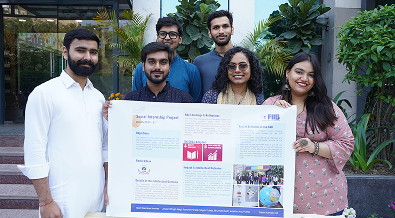
A two-week field immersion that develops empathy, responsibility and an understanding of how financial and managerial decisions affect communities.
2 weeks | Social-sector immersion | Purpose-led problem-solving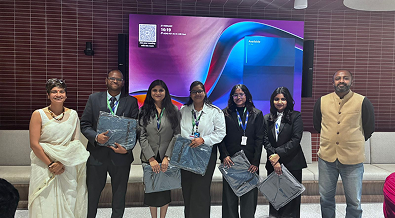
A 10–12 week internship where students apply classroom learning in a corporate setting and build evidence of finance capability through real assignments.
10–12 weeks | Double credit | Corporate project | PPO-focused mentoring
Two structured simulations help students rehearse finance roles, make decisions under pressure and receive targeted feedback before recruitment.
CPS I + CPS II | Role plays | Industry scenarios | Career-track practice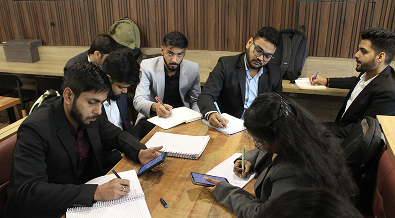
FIIB’s Master Research Dissertation and program capstone pairs academic research with a finance-relevant, corporate-facing topic in the final trimester.
Final capstone | Master Research Dissertation | Corporate-relevant research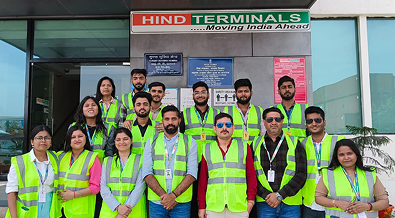
Projects progress from firm-specific to sector-specific and career-pathway challenges, enabling students to create investment theses, pitch books, econometric models and other recruiter-visible portfolio work.
Live briefs | Functional and cross-functional problems | Tangible outcomesA faculty team that connects finance theory, research and industry practice.
FIIB's PGDM FM faculty team includes Dr. Purnima Rao, Dr. Anil Kumar Sinha, and Prof. Indrajit Lahiri, combining academic finance research with senior industry banking experience.
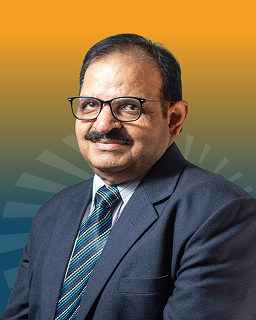
Director & Sr. Professor,
Finance

Professor,
Finance & Accounting

Assistant Professor,
General Management
Yes. The Guided Independent Study (GIS), FIIB's Master Research Dissertation, is the capstone of the program, pairing academic research with a finance-relevant, corporate-facing topic in the final trimester.
Yes. The Guided Independent Study (GIS), FIIB's Master Research Dissertation, is the capstone of the program, pairing academic research with a finance-relevant, corporate-facing topic in the final trimester.