Interactive Learning Through Gamification
We incorporate gaming into our curriculum with quizzes and assignments to larger group projects, which include points, rewards, and competition.
From management foundations to applied judgment, AI-enabled problem-solving and career practice.
FIIB's PGDM curriculum spans six terms and covers management foundations, applied analytics, AI-enabled problem-solving, and career-pathway practice, combining classroom learning with internships, simulations and a final research capstone.
The FIIB PGDM curriculum is designed as a progressive capability journey. Students first build a strong understanding of business, then test it through simulations, live projects, internships, research and career-pathway practice. Across six terms, classroom learning and real business exposure work together so that students learn how to analyze evidence, make decisions and take responsibility for outcomes.
FIIB's PGDM pedagogy combines gamified learning, role-play simulations, hands-on financial and business exercises, interdisciplinary problem-solving, structured debate, peer collaboration and continuous faculty feedback across all six terms.
Our pedagogy is driven by a commitment to experiential learning, technology integration, and a global perspective. We empower students with critical thinking, ethical decision-making, and an entrepreneurial mindset, preparing them for dynamic careers in the modern business landscape.

We incorporate gaming into our curriculum with quizzes and assignments to larger group projects, which include points, rewards, and competition.
Students take on different roles in business scenarios, allowing them to practice negotiation, conflict resolution, and leadership skills in a safe and controlled setting.
We promote experiential learning through hands-on exercises like analyzing financial statements, conducting market research, or developing business plans.
We use tech for collaborative projects, and data analytics tools for informed decision-making.
We encourage students to draw from multiple disciplines to solve complex problems as business challenges often require insights from areas such as psychology, economics, and ethics.
Constructive debate is encouraged. We encourage students to question assumptions, analyze data, and evaluate different viewpoints.
With collaborative learning as our approach, students work in teams and learn from each other’s diverse perspectives and experiences.
Students receive feedback on their performance, enabling them to monitor their development and make improvements in their educational journey.
FIIB's classroom experience combines structured coursework with case-based discussion, live data and collaborative problem-solving across every term of the PGDM program.
At FIIB, experiential learning is part of the curriculum, not an occasional addition. Students work with social organisations, companies, industry mentors and research problems across the two-year journey, building evidence of how they think and perform.
FIIB's PGDM curriculum builds five structured experiential components into the program: the Social Internship Program (SIP), Corporate Internship Program (CIP), Career Pathway Simulation (CPS), Guided Independent Study (GIS) capstone, and live projects, so every term pairs classroom learning with real business exposure.
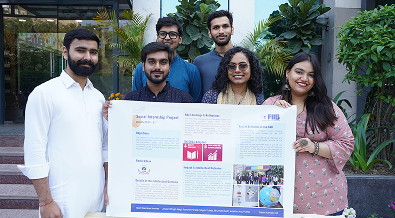
A two-week immersion that connects business learning with social impact. Students collaborate with social-sector organisations, understand problems at the grassroots and develop practical solutions with responsibility and purpose.
2 weeks | Social-sector immersion | Purpose-led problem-solving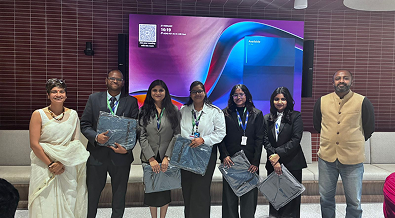
A 10–12-week, double-credit internship that connects classroom concepts with real organisational work. Students take on recruiter-relevant projects, receive mentoring and work towards outcomes that can strengthen their pathway to a pre-placement offer.
10–12 weeks | Double credit | Corporate project | PPO-focused mentoring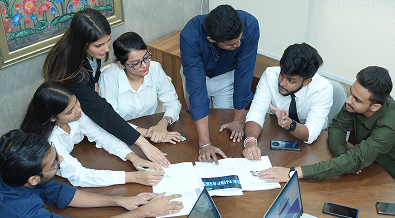
A two-stage simulation experience that places students in role-specific scenarios, conversations and decisions. CPS helps students practise the tools, expectations and judgement associated with different career tracks before entering the workplace.
CPS I + CPS II | Role plays | Industry scenarios | Career-track practice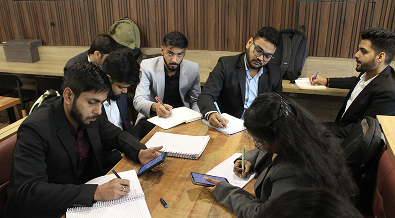
The program capstone, structured as a Master Research Dissertation. Students combine academic research with a corporate-relevant topic, strengthening their ability to frame a question, evaluate evidence and develop a defensible recommendation.
Final capstone | Master Research Dissertation | Corporate-relevant research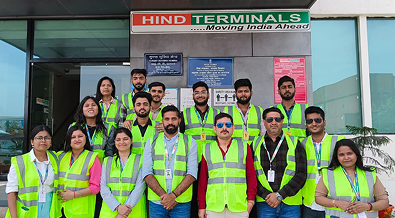
Students work on current problems across marketing, finance, HR, operations and broader management areas. These projects require them to understand a brief, collaborate with stakeholders and turn concepts into an actionable business response.
Live briefs | Functional and cross-functional problems | Tangible outcomesFIIB's PGDM faculty combine academic scholarship with industry experience, mentoring students on live projects, research and career decisions rather than teaching from theory alone. Learn with mentors who bring academic depth and real-world perspective into the classroom.
FIIB faculty combine scholarship, industry experience and practice-driven research. Their role goes beyond delivering courses: they mentor students, guide projects, challenge assumptions and help learners connect academic ideas with business decisions.

Dean Research & Outreach,
Professor, Marketing

Professor,
Finance & Accounting

Associate Professor,
General Management

Assistant Professor,
General Management
FIIB's autonomous PGDM structure allows the curriculum to be reviewed and updated more frequently than a fixed, regulator-mandated syllabus, so course content can respond quickly to shifts in industry and technology.
FIIB's autonomous PGDM structure allows the curriculum to be reviewed and updated more frequently than a fixed, regulator-mandated syllabus, so course content can respond quickly to shifts in industry and technology.