

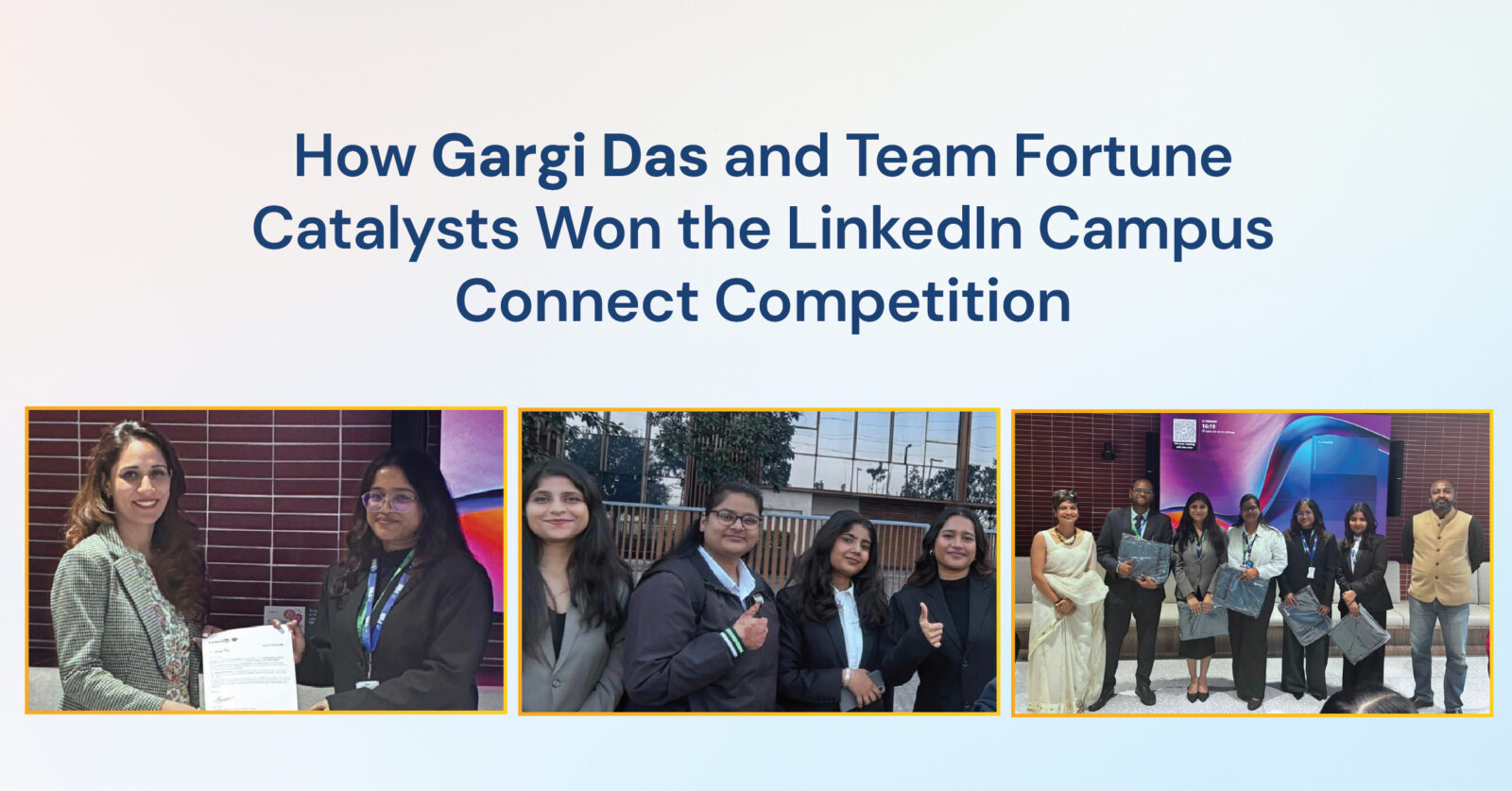
Competing at a national level platform was not part of Gargi Das’s original plan for her MBA. The opportunity reached her through the C-ACE program at FIIB, and she gave it considered thought before committing to it. What eventually settled the question was a line of reasoning she put to herself: “what if I just try and discover my own potential?” She counted till five, said yes, and left the rest to the universe. Weeks later, her team walked out of the LinkedIn Campus Connect Competition as its winners.
The Five Seconds That Started It
“Sometimes, the most meaningful journeys begin with uncertainty,” Gargi says, and her own entry into the competition began exactly there. The opportunity came through C-ACE, guided by Dr. Sahiba Sahny and Dr. Tavleen Kaur, a platform she credits with allowing students to “step beyond academics and engage in real-world problem solving.” That description is precisely what persuaded her to look at it seriously.
Her reservations, when she articulates them, are specific rather than vague. She was weighing how much she could contribute to a team she had not worked with before, and whether she was equipped to operate outside familiar territory: “I was unsure if I would be able to contribute meaningfully, whether I could connect well with my team, or even if I was ready to step out of my comfort zone.” Rather than allow that assessment to harden into a decision, she treated it as a question worth testing, and committed before she had the answer.
Becoming the Fortune Catalysts
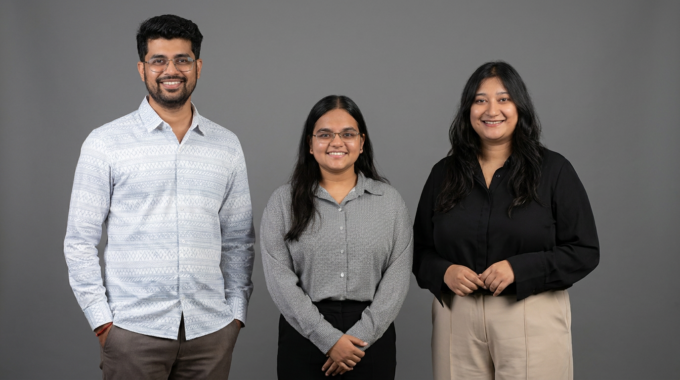
Saying yes placed her in a team of five. Alongside Kvbg Swamy, Kajol Kumari, Palak Srivastava and Nandini, Gargi competed as The Fortune Catalysts, and the group took some time to find a working rhythm. “Initially, it felt challenging to collaborate and align our ideas,” she says, “but gradually, we built understanding and trust.”
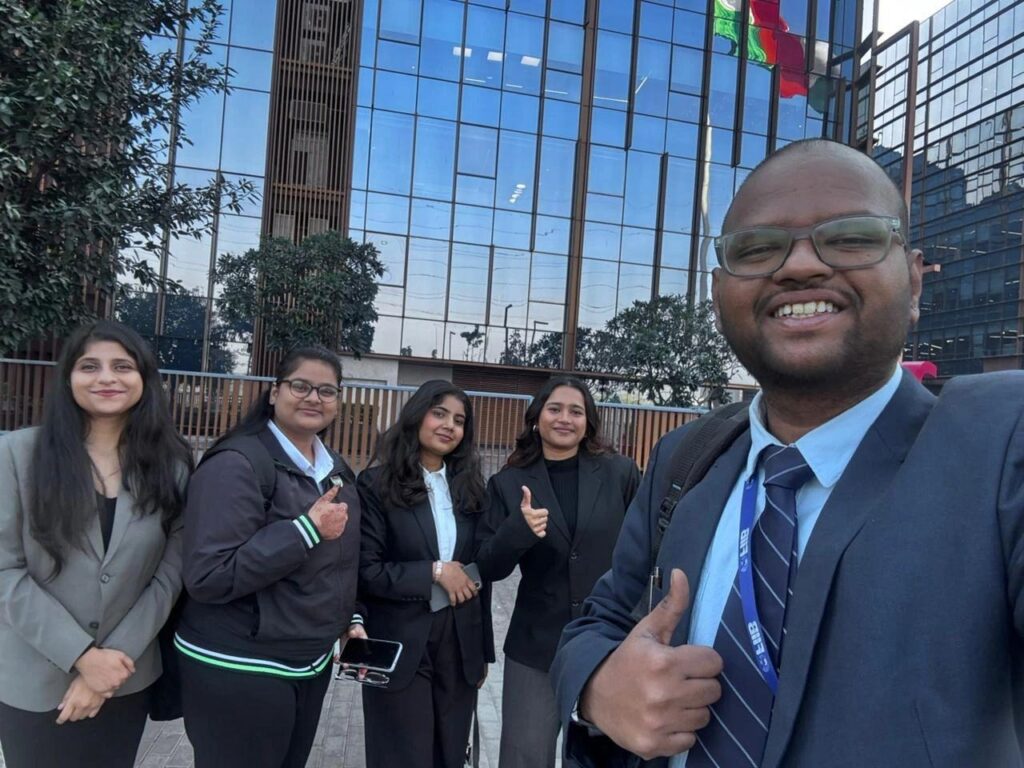
What ultimately held the five of them together was not a shared working style but a shared standard of effort. As Gargi puts it, “what brought us together was a shared willingness to put in the effort and do our best,” and that willingness is what converted five individual contributors into a functioning team.
A Real Problem, Not a Hypothetical One
The competition placed a live business question in front of the participating teams: how do you increase student engagement with LinkedIn Learning? The Fortune Catalysts chose to begin with diagnosis rather than solution, mapping the barriers that genuinely keep students away from the platform, namely lack of awareness, unclear learning direction, time constraints, and low motivation.
The discipline the team held on to throughout, according to Gargi, was a refusal to speculate. “We did not rely on assumptions; instead, we discussed, analysed, and built our strategy around real student behaviour and needs.” Long hours of ideation and refinement followed, and what emerged from them was a recommendation the team could defend on evidence, or in her words, “a solution we truly believed in.”
The Moment Her Voice Broke
Presentation day placed weeks of preparation in front of a panel of judges, and Gargi was the one carrying it. She had worked through the night and rehearsed the script until its structure was second nature, though the opening moments did not unfold as she had planned: “the moment I started speaking, my voice broke.” She steadied herself within a few sentences. “With the support of my team and the encouragement from the judges, I was able to calm myself and continue. Slowly, my confidence returned, and I was able to present effectively.”
That recovery, more than the eventual result, is what Gargi identifies as the genuine outcome of the competition. It established something she had not previously had occasion to test, which is that composure is recoverable, and that an unsteady opening does not determine how the remaining ten minutes go.
The Major Competition Takeaway
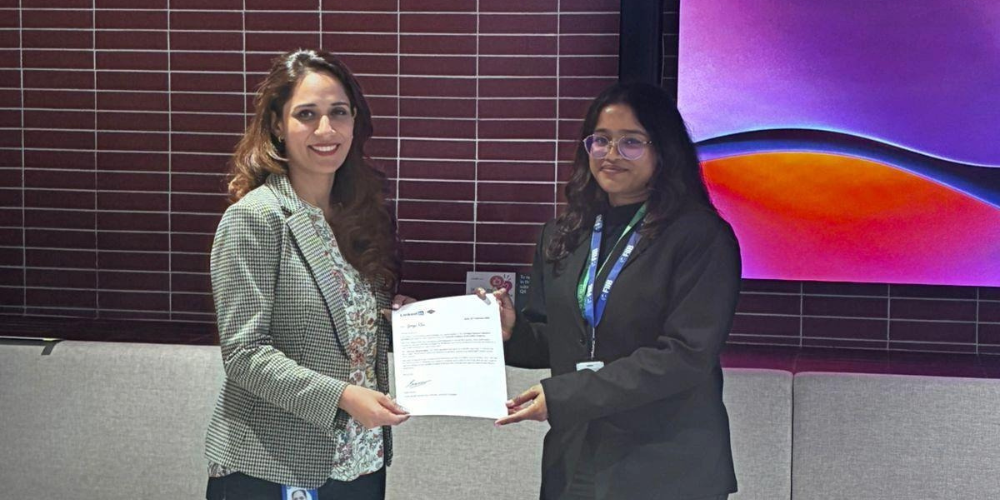
The Fortune Catalysts were declared winners, though Gargi is notably measured about what the result signifies. “Winning the competition was an incredible feeling, but more than that, it was the journey that mattered,” she says. “It was about showing up despite fear, putting in consistent effort, and growing along the way.”
She leaves the experience with two convictions. The first is that perception is the variable most worth managing, since “it made me realise how powerful the human mind is, and how often our fears are much bigger than the reality.” The second is that self-belief functions as a starting condition rather than a reward for competence already proven, because “if you believe you can do something, trusting that thought can actually lead you to achieve it.”
Gargi credits FIIB and the C-ACE program for the platform, and her mentors for the encouragement to use it. Experiences of this kind, she observes, “go beyond winning or losing; they shape our mindset, build our confidence, and prepare us for the real world.”
And if there is one line worth carrying out of her story, it is the one she chooses to end on: “Growth begins the moment you choose to step into something that scares you.”











Leave a comment