

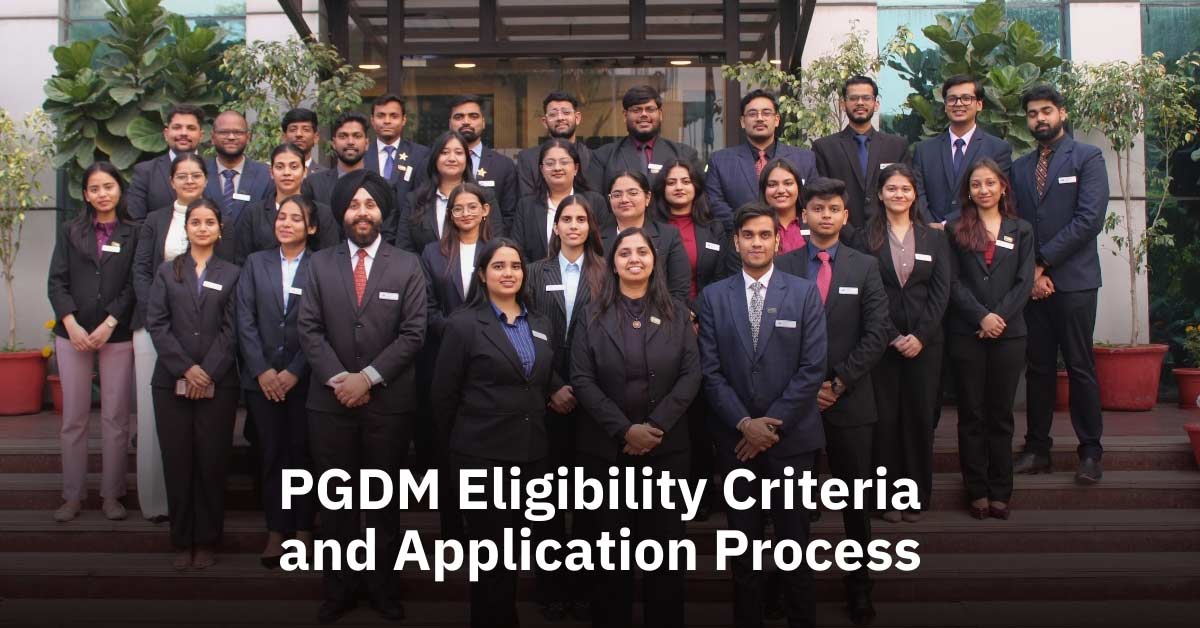
A Post Graduate Diploma in Management (PGDM) is a popular, industry-oriented management program offered by AICTE-approved institutes in India. It’s designed to build practical business skills and often updates its curriculum faster than many traditional university programs. If you’re planning to apply, understanding the eligibility criteria and the step-by-step application process will help you shortlist the right colleges and avoid last-minute mistakes.
What is PGDM?
PGDM is a postgraduate diploma program in management that typically runs for two years and offers specializations like Marketing, Finance, HR, Business Analytics, Operations, and more. Unlike an MBA (which is a degree awarded by a university), PGDM is a diploma awarded by an autonomous institute—often with a strong industry focus.
PGDM Eligibility Criteria
Eligibility can vary slightly by institute, but most colleges follow a common structure.
1) Educational Qualification
Most PGDM programs require:
- A Bachelor’s degree (10+2+3 or 10+2+4) in any discipline
- From a recognized university/institution
- With a minimum percentage/CGPA (varies by college)
2) Minimum Marks Required
Common requirements include:
- 50% aggregate in graduation for General category
- 45% aggregate for reserved categories (SC/ST/OBC) in many institutes (as per their policy)
Some top institutes may set a higher cutoff (like 55%+), so always check the official admission notice.
3) Final-Year Students: Can You Apply?
Yes, most institutes allow final-year graduation students to apply, provided:
- They submit proof of passing their degree before the admission deadline
- They meet minimum marks criteria once results are declared
4) Entrance Exam Requirement
Most PGDM admissions consider scores from one or more management entrance exams, such as:
- CAT
- XAT
- CMAT
- MAT
- GMAT
- ATMA
- Institute-specific tests (in some cases)
The accepted exams and score expectations depend on the institute (Tier 1, Tier 2, etc.).
5) Work Experience (If Any)
- Not mandatory for most PGDM programs
- However, work experience can add value in selection rounds like interviews and profile-based shortlisting
- Executive PGDM programs (for working professionals) often require 2–5+ years of experience
Quick Eligibility Snapshot Table
| Criteria | Typical Requirement |
| Qualification | Bachelor’s degree (any stream) |
| Minimum Marks | 50% (Gen), 45% (Reserved—varies) |
| Final-Year Students | Allowed (with conditions) |
| Entrance Exam | CAT/XAT/CMAT/MAT/GMAT etc. |
| Work Experience | Optional (unless executive PGDM) |
PGDM Application Process: Step-by-Step Guide
The application process is usually online and broadly follows these stages.
Step 1: Shortlist PGDM Colleges
Start by creating a list based on:
- Specializations offered (Marketing/Finance/BA etc.)
- Accreditation/approval (AICTE approval is important)
- Placement records and average packages
- Location, fees, ROI, industry connect
- Exam acceptance (CAT/XAT/CMAT etc.)
Tip: Shortlist a mix of ambitious + safe options.
Step 2: Check Entrance Exam Requirements and Apply
Most colleges require a valid exam score. So you’ll need to:
- Register for the relevant exam(s)
- Appear for the test
- Use your scorecard while applying to colleges
Helpful approach:
- Apply via CAT/XAT/CMAT if targeting a wide range of institutes
- Consider MAT/ATMA for additional opportunities depending on college acceptance
Step 3: Fill Out the Online Application Form
Once applications open, you’ll typically:
- Create an account on the institute’s admission portal
- Fill in personal details and academics (10th/12th/graduation)
- Add entrance exam details (roll number/score if available)
- Select specialization preferences (if asked)
Common form sections:
- Personal profile
- Academic history
- Work experience (if any)
- Achievements/extracurriculars
- Statement of Purpose (SOP) or essays (in some colleges)
Step 4: Upload Required Documents
Most institutes ask for scanned copies of:
- 10th & 12th mark sheets
- Graduation mark sheets / provisional certificate (or latest semester marks for final-year students)
- Entrance exam scorecard (when available)
- ID proof (Aadhaar/Passport/Driving License)
- Passport-size photograph and signature
- Category certificate (if applicable)
- Work experience documents (offer letter, salary slips, relieving letter—if applicable)
Tip: Keep files named clearly and within size limits (often 200 KB–2 MB per file).
Step 5: Pay the Application Fee
You’ll usually pay online via:
- UPI / Net Banking
- Debit/Credit Card
- Wallets (sometimes)
Application fees vary widely (often ₹500–₹2500). Save the payment receipt.
Step 6: Shortlisting for Selection Rounds
After applications close, institutes shortlist candidates based on:
- Entrance test score
- Academic profile
- Work experience (if any)
- Diversity factors (in some colleges)
Shortlisted candidates are invited for one or more of the following.
Selection Rounds After Applying
Group Discussion (GD)
- Topic-based discussion to judge communication, leadership, and teamwork
Written Ability Test (WAT)
- Short essay or opinion write-up (tests clarity and structure)
Personal Interview (PI)
- Most important round
- Questions may cover academics, work experience, goals, current affairs, and personality
Some institutes use a combination of PI + WAT, while others still include GD.
Final Admission Offer and Confirmation
If selected, you’ll receive an offer letter. To confirm admission, you typically must:
- Pay the admission/seat booking amount by the deadline
- Submit original/verified documents during reporting
- Complete medical/undertaking forms (if required)
Common Mistakes to Avoid
Here’s a quick checklist to keep your application clean and complete:
- Applying without checking exam acceptance
- Missing deadlines for form submission or fee payment
- Uploading blurry documents or wrong file formats
- Writing generic SOPs (copy-paste content hurts your profile)
- Ignoring your interview preparation until the last moment
FAQs on PGDM Eligibility and Applications
Is PGDM valid for jobs and higher studies?
Yes—PGDM from a reputable, AICTE-approved institute is widely accepted in the job market. For higher studies, acceptance depends on university and country requirements.
Can I do PGDM without CAT?
Yes. Many institutes accept XAT/CMAT/MAT/ATMA/GMAT or conduct their own tests, depending on the college.
What if my graduation marks are below 50%?
Options may be limited, but some colleges have different eligibility thresholds. You can also explore programs with flexible criteria or consider improving your profile through relevant certifications and work experience.
Conclusion
PGDM admissions are competitive, but manageable if you plan well. Start by checking your eligibility, selecting the right entrance exams, and applying early with accurate documents. Then focus on the selection rounds (WAT/GD/PI)—because that’s where strong candidates often stand out.
If you want, I can also create a college-ready checklist (documents + deadlines + interview prep) you can copy-paste into Notes.















Leave a comment